URRO

Blog

Uganda Preproduction Rights Organization 2025 Annual General Meeting

Uganda Preproduction Rights Organization 2025 Annual General Meeting cancelled

Good afternoon Members,

This is to inform you that the Uganda Reproduction Rights Organisation (URRO) Annual General Meeting, which was scheduled for Thursday, 27th November 2025, has been postponed.

A new date will be communicated soon. We regret any inconvenience caused and appreciate your understanding.

Thank you.
URRO Secretariat

URRO Q&A WITH EMMANUEL N. MUKANGA:A LIFE ACROSS CONTINENTS, A VOICE ROOTED IN CULTURE

Emmanuel N. Mukanga’s writing reflects a life richly lived – across Uganda, Nairobi in Kenya, Dar es Salaam in Tanzania, Munich, Berlin and Hamburg in West Germany and beyond. His two-volume autobiography captures a journey through political upheavals, cultural transitions, and creative milestones. In Volume 1, he celebrates the deep cultural roots of the Samia of Kenya and Uganda. From coordinating the Makerere University Free Travelling Theatre to working as a producer and journalist at Uganda Television (UTV) and the Voice of Kenya Television (VoK TV), and being trained at Sender Freies Berlin, in TV Production, Direction and Editing, Mukanga has spent a lifetime shaping and sharing stories that bridge tradition and modernity.In this Q&A, he shares reflections on writing, exile, heritage, and what drives his life-long pursuit of storytelling.

Q1. Your autobiography unfolds in two volumes capturing a life that spans multiple Continents. What motivated you to tell your story so extensively?

A1. Initially in 1981, just over a year after my marriage to Lucy, we came from West Germany to Uganda for Christmas. I suggested to my elder brother, who had brought me up, that I was interested in writing his biography and gave my reasons why. I told him that he had led a colorful life right from university at Makerere, when he led students to demand that beer be sold on Campus and succeeded. Up till then, Africans were not allowed to drink bottled beer anywhere in the Protectorate. He then worked for a petroleum company, went into politics at local government level and eventually joined the first independence National Assembly in 1962, and became the Minister of Foreign Affairs the following year. When the Government he worked for was overthrown in 1971 by Idi Amin, he ended up in exile in Dar es Salaam and came back in 1979 after Amin’s removal. He went into business and was also chairman of the board of governors of The Milton Obote Foundation that owns Uganda House.However, my brother was not keen that I write his biography, so towards 2009, I realized that I too had led quite an interesting life in over 20 countries on 3 continents. That’s when I started putting pen to paper about my life, doing research and talking to elders who knew more than I did, about me, my family, my origins, my country, continent and the world at large.

Q2. When you look back at your youth in Uganda, what moments or experiences first awakened your love for story telling?

A2. As you may be aware, I was brought to Kampala from the village in Eastern Uganda when I was just 3 years old. I was then put in a nursery school at the Naguru Community Centre Hall, where I believe we were told stories and rhymes, though I wouldn’t remember any of them. When I went to Entebbe in P4 we were introduced to many stories, some of which were very funny others captivating. In 1964, Uganda Television came on air and as we had a small TV at home, I watched a lot of TV, especially weekly series. I also went to the cinema with my friends and we ended up narrating what we saw on TV and at the cinema to our friends who had not seen the movies or just exchanged notes with those who had. I believe that is what awakened in me the love for story-telling.

Q3. You began your career as coordinator and leader of the Makerere University Travelling Theatre. What impact did theatre have on your understanding of people and narrative?

A3. During the three years as a member of the Makerere Free Travelling Theatre, I learnt that everybody needs a good laugh, even if it is at the misfortunes of others. Secondly, when you are narrating a story, especially through theatre and to diverse audiences, make the narrative simple to understand and reflective of the audiences’ experiences. The University of Nairobi also started its own travelling theatre with the help of author and dramatist, the late John Ruganda, who had started the travelling theatre at Makerere.

Q4. As a journalist at Uganda Television, you witnessed Uganda’s political and cultural transformations firsthand. How did that shape your worldview and voice as a writer?

A4. That experience convinced me that I had to document what I witnessed. I met and shook Idi Amin’s hand at least ten times, because he often came to the Nakasero studios and I also saw and met him at workshops and functions, like the Agricultural Show in Jinja which I used to cover. At UTV, I was put in charge of drama and was thereby able to help upcoming dramatists to sharpen their presentations. I fled Uganda when Amin was still president and before the 1979 war. During that period many people disappeared and were murdered without trace. Others like myself fled the country and many of my OBs and colleagues left the country forever. I have a friend in Germany who has never set foot in Uganda again since he left in the early 70s. I started working at UTV after my first year at Makerere and joined full time on graduation. The following year I fled to Tanzania into exile

Q5. You grew up under the guidance of your elder brother, the late Sam Odaka, a key figure in Obote’s government. How did his mentorship influence your personal values and career path?

A5. As mentioned earlier, my elder brother Sam Odaka made sure that I got a good education from nursery to S6. He was in exile when I completed my HSC and when I joined and completed my University education at Makarere. He was a father figure to me and cared a lot about me and for me. He loved being with people and practically every day, his friends came to visit him at home. He never looked down on anybody and chose his words carefully. I have tried to emulate him but as years advance, instead of having friends come to my home, I meet my friends in the city Centre at certain specific locations. Because he used to get all the English and Luganda newspapers at home every day, he insisted that I read all of them daily, in addition to some weekly and monthly magazines like The Weekly Topic, Time and Newsweek. That way I got to know what was going on in the country and in the world. When he was a boy scout, he was sent to England for a jamboree. It was obvious that I also had to become a cub scout and later on a boy scout and to look forward to going abroad.

Q6. The collapse of the Oboe Government forced you into exile. How did life in Tanzania and Germany transform your perspective on identity, home, and belonging?

A6. Going into exile was not the first time I was leaving my homeland, Uganda. While on the Makerere Free Travelling Theatre in my second and third year, our itinerary included performing in Kisumu, Nakuru and Nairobi, where we also acted on Voice of Kenya Television. Life in Tanzania and Germany transformed my perspective on my identity, home and belonging in several ways. I loved Dar es Salaam because I felt at home there and was with part of family. The Tanzanians were Africans like myself and I was able to improve my Swahili. I was there for only nine months and within the first three weeks I had taken driving lessons and had a driving licence. I also got to meet the German ambassador at a cocktail at my brother’s place and on telling him that because the Germans were the ones who had supplied UTV with Outside Broadcasting vans, I would like to go to Germany for further training. He invited me to the embassy where I filled out an application form. It took nearly a year before I was invited to go to Berlin, by which time I had moved to Nairobi and it was the German embassy in Nairobi which told me when and to where I would be going to Germany.Germany was very different. The people were different, overwhelmingly white, with very few foreigners at that time, especially blacks. So my friends were from Africa, the Caribbean and Blacks from Trinidad and Tobago and from the US. On weekends we mostly went to a disco called the Cadillac where we danced away to African and Caribbean music. Bob Marley and Jimmy Cliff were very Popular. Some bands from the then Zaire would also perform live and we would not miss any performance. That way I learnt that I was not only Ugandan and African, but also belonged to the Black Race.The food was different, though I loved the sausages, bacons and an assortment of hams. I went to Germany for 14 months but stayed for 14 years. As the years went by, I started having a strong yearning to return home to Uganda. I realized that going back to Tanzania or Kenya would not do. I had to go back to Uganda where I wanted my 3 children to be raised from.

Q7. The Discarded Brick Volume 1 draws from the Samia people’s oral traditions. What wisdom from that culture do you feel is most relevant today’s changing world?

A7. In my third book, “The Wisdom Pot,” I included a picture of men seated around a big round clay pot, seeping their malwa (sorghum beer), using long straws of 1-2 metres long. This communal partaking of the drink enables people to exchange news, address problems and disputes and propose solutions. I wanted to use that picture on the cover page but my publishers in India told me that people would not understand what it was all about. Men with only one wife are not allowed to seat next to the pot for fear that if a man was told that his one wife had died, he could easily kick and break the beer pot. This way of promoting social cohesion is worth emulating even in today’s changing world.

Q8. How do you balance your roles as historian of your own life, a custodian of culture, and creative storyteller?

A8. I see no contradiction between being a historian of my own life, a custodian of culture and a creative storyteller. To the contrary, I learnt a lot about myself, my family, our culture and history. I did not know that my clan is said to have originated in Bunyoro and I ended up taking a Munyoro girl for a wife. Nor did I know that my father was a primary school headmaster for 13 years I always knew him as a fish merchant. These discoveries have enabled me to be more knowledgeable and creative in my storytelling.

Q9. What challenges have you faced as an African writer publishing stories that span both traditional and global contexts?

A9. The challenges have been several. Firstly, identifying the right publisher both locally and internationally was not easy. I zeroed down on an Indian publisher because all the others were too expensive. 2021 and 2022 when three of my books were published was also during the Covid 19 pandemic and although it enabled me to dedicate more time to completing my books, restrictions like curfew were a hindrance. As earlier mentioned some of the images I wanted to use were rejected because they lacked universal appeal. Publishing from abroad has the problem that freight charges and pre-tax raise the purchase price per book by nearly three times. I therefore requested my publishers to send me digital copies of the books so that I print and bind from Kampala, which has significantly brought the price down.

Q10. Many young writers in Uganda are just beginning their journey. What advice would you give them about staying authentic to their roots while writing for a wider audience?

A10. I would recommend that they consult veteran writers to help them with editing and proofreading. They should also be able to accept a critical appreciation of their work for improvement. To remain authentic to their roots, they need to do the necessary research about their roots, so as not to misrepresent their origins.

Q11. You’ve lived and worked in diverse societies. How has this global experience influenced the way you view African literature today?

A11. In my younger days I used to read mainly European novels such as those by James Hardley Chase, James Joyce and others. This was in addition to set school books which included a lot of African literature, by authors like Chinua Achebe and Ngugi wa Thiongo, together with mainly English authors like William Shakespeare and Charles Dickens. South African, Nigerian and Ghanaian authors have also written captivating books. In West Germany, I was also exposed to German authors after having mastered the language to enable me to do my Master’s degree in Mass Communication.I find African literature very captivating and down to earth and I relate very closely with it because it describes scenes and situations that I am familiar with and that bring out our African heritage and culture.

Q12. What projects are you currently, working on and how can readers find or access your books?

A12. Mid this year, I published my fourth book, “The Development of the Mass Media in Uganda – 1962-1982.” Currently I am mainly occupied with trying to sell my books. I gave some books to a bookshop to sell for me, but in two years they told me that they had sold only one book. I had been warned about this by a reputable printer, who said that some bookstores re-print authors books and sell their copies while yours are not sold.My next book will be called, “Majanji, the Forgotten Port.” I started talking about this port in the “Discarded Brick, Volume 1.” Majanji Port, which lies 13 kilometres from Lumino, my birthplace in Busia district, was commissioned in 1916, during the first World War. The British were fighting the Germans then in Tanganyika and had recruited natives to fight for them. Soon afterwards there was drought and famine and in 1917, the British brought in sacks of rice from India, through Mombasa and by train to Kisumu. The rice was then put on steamships to the Uganda Protectorate. On arrival at Majanji Port, it had been infested with fleas carried by rats, that carried the Bubonic plague known in Luganda as Kawumpuli. It spread all over the country and killed may people. During the great floods of 1961/62, Majanji port was submerged and when the water subsided, it has never been re-opened.Every year, the American Library of Congress sends someone to Kampala to buy books from Ugandan authors, which are then given to some universities in the US and the UK. They have bought several copies of each of my 4 published books. This year, the Russians too came and bought some books and they will be back next year. Otherwise my books are available on Amazon, Kindle, Flipkart, KOBO iBooks, The Notion Press of India and from me, the author.

Closing Note This Q&A is part of URRO’S initiative to highlight Ugandan authors and cultural voices whose work inspires new generations of writers. By sharing stories that celebrate both heritage and human experience, URRO aims to promote creativity, literacy, and author’s rights in Uganda and beyond.

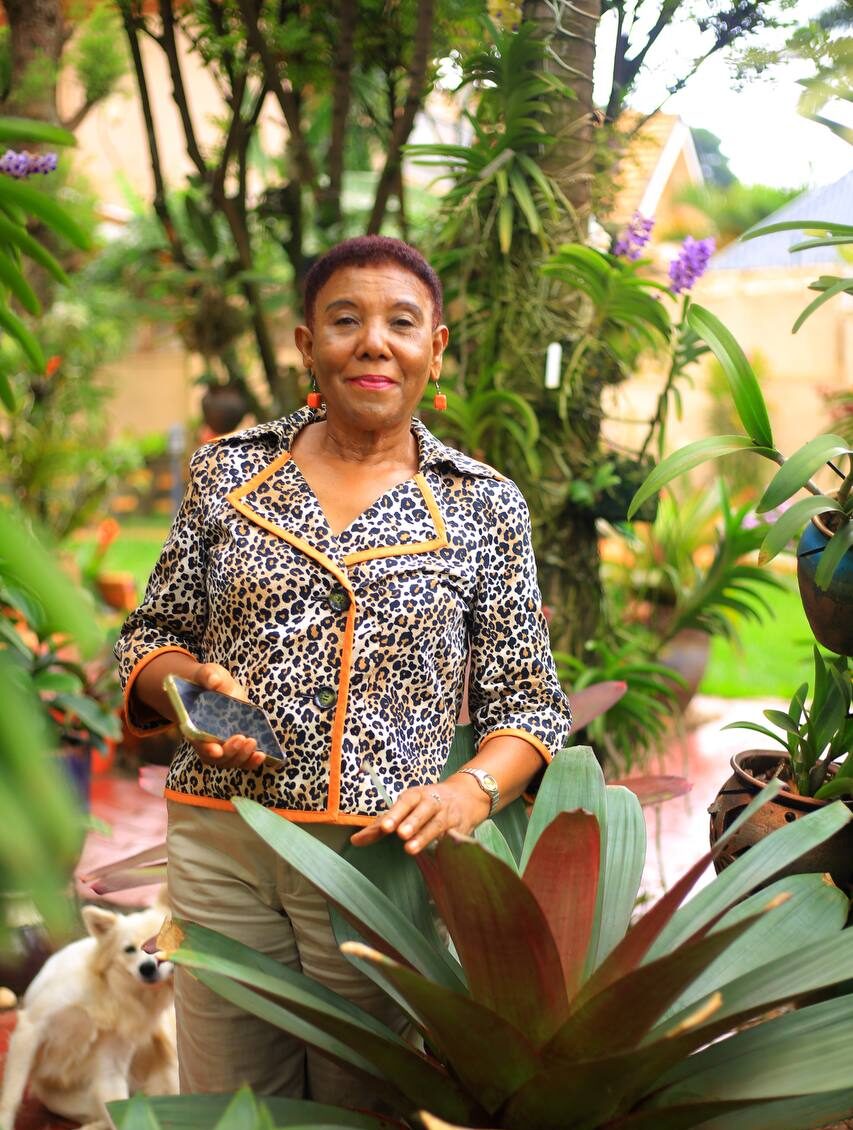
Q&A with Ameria Momo Masiko

Author, Mentor, and Nature lover.
Theme: Coping with Identity Crisis — Grow. Thrive. Heal: The Transformative Power of Nature.

Q1. You describe yourself as a person of multiple heritage — a Muchotala / coloured who chose to identify as a Mukiiga. How has this complex identity shaped your personal journey and the stories you tell as a writer?

Ans.
I am happy to share my story, what an intriguing question. My story is about the challenges of Growing up with multiple heritages that can be like navigating a lush garden with diverse, vibrant flora – it’s beautiful yet complex. Each flower represents a different part of my identity, and I’ve had to learn to appreciate the unique beauty of each one. As a Muchotala/coloured person who chose to identify as a Mukiiga, I’ve had to navigate the intricacies of belonging and self-discovery.

My life is like a Lotus flower, symbolizes my resilience in the face of adversity, blooming in the muddiest of waters yet remaining strong. Like the delicate petals of a Cherry Blossom, my identity has been shaped by the fragility and beauty of cultural heritage. The thorns of a Rose represent the challenges I’ve faced in a society bound by traditional expectations, particularly around gender roles.

Through the seasons of life, I’ve faced many challenges – struggles in school, job loss, marriage, and business struggles. But like the Sunflower’s ability to follow the sun, I’ve learned to focus on growth and find strength in adversity. My story is one of growth, thrive, and heal – and I believe that nature has been a constant source of inspiration and solace in my journey.

As I reflect on my experiences, I’m reminded that the complexity of my heritage is not a weakness, but a strength – a vibrant tapestry of experiences that make me who I am today. Through my writing, I hope to inspire others to find their own path, just as nature has inspired me While coping with the identity crisis, to grow, thrive, and heal.”

Q2. You spent your early career years in Nairobi in the 1980s, working with the external wing of the NRM/A. How did that period of exile influence your worldview, and do those experiences appear in your writing today?

Ans.
“My time in Nairobi in the 1980s, working with the external wing of the NRM/A, was a pivotal period in my life. As a young activist, I was driven by a desire to contribute to the empowerment and freedom of my people, particularly women. I recall the struggles and challenges we faced, but also the sense of purpose and camaraderie that came with working towards a common goal.

That experience not only shaped my worldview but also influenced my writing. I draw inspiration from the resilience and determination of the people I worked with, and the struggles we faced continue to inform my perspective on social justice and human rights. My experiences have taught me the importance of amplifying marginalized voices, particularly those of women and girls who were often overlooked or underrepresented.

In today’s world, I firmly believe that gender equality and empowerment are fundamental to creating a just and equitable society. An empowered woman can tackle big challenges, but when paired with a man who isn’t empowered or is bound by stereotypes and conservative ideologies, it can be even more daunting. That’s why it’s crucial to work on empowering both men and women, challenging patriarchal norms, and promoting a culture of mutual respect and understanding.

As a writer, I aim to contribute to this narrative, highlighting the strength and agency of men, boys, women and girls, and exploring the complexities of relationships and power dynamics. My experiences have shown me that when men and women are both empowered, communities thrive, and I believe that this message is more relevant now than ever. By working together to challenge stereotypes and promote gender equality, I believe we can create a more just and equitable world for all.”

Q3. Later, you worked in the President’s office, What lessons did you carry from that chapter of public service into your creative and mentoring life?

Ans.
“Working in the President’s office was a transformative experience that taught me valuable lessons about leadership, governance, and the human side of policy-making. One of the key takeaways was the importance of humility, understanding, and effective communication in building strong relationships and achieving personal growth. I learned that true leadership is not about titles or power, but about serving others and making a positive impact.

These lessons have stayed with me in my creative and mentoring work. I’ve come to realize that humility, empathy, and strong communication are essential in understanding people’s needs, building trust, and fostering meaningful connections. As a writer, I’ve learned to approach my characters and stories with a deeper understanding of the human condition, and to craft narratives that reflect the complexity and beauty of life.

But one of the most profound lessons I’ve learned is that you don’t need to be famous, hold a high-ranking office, have a string of degrees, or be wealthy to make a real impact on people’s lives. I’ve seen firsthand that ordinary people can do extraordinary things when they are passionate, dedicated, and committed to making a difference. This realization has humbled me and inspired me to focus on the work that truly matters – touching lives, telling stories that need to be told, and empowering others to find their path”

Q4. When you retired from office, you chose a completely different path — micro finance, mentoring and creating beautiful spaces, What drew you to these activities and how do you find healing or inspiration through nature?

Ans.

“After leaving office, I felt a void that couldn’t be filled by the trappings of power or prestige. I yearned for meaning and purpose that came from making a tangible difference in people’s lives. Microfinance, mentoring, and creating beautiful spaces allowed me to do just that.

I was drawn to microfinance because I believe in the power of economic empowerment, especially for women. Seeing individuals and communities thrive through small loans and support is incredibly fulfilling.

Mentoring has been a privilege, allowing me to pay it forward and guide others on their own paths. I find joy in watching people discover their strengths and passions.

Creating beautiful spaces is my way of connecting with nature and expressing creativity. Nature has been a source of healing and inspiration for me. Being in nature reminds me of the beauty and wonder of life, and it puts things into perspective. The rhythms of nature teach me about patience, resilience, and the importance of living in harmony with the world around us.

Through these activities, I’ve found a sense of purpose and fulfillment that I didn’t know was possible. They’ve taught me that true wealth isn’t measured by title or bank balance, but by the positive impact we have on others and the world around us.”

Q5. Your work, “Coping with Identity Crisis — Grow, Thrive, Heal”, explores transformation through nature. Could you tell us about the message at the heart of this project?

Ans

“My books, ‘Coping with Identity Crisis’ and ‘Grow, Thrive, Heal: The Transformative Power of Nature’, explore the human experience and the power of nature to heal and transform. In ‘Coping with Identity Crisis’, I delve into the universal struggle of finding oneself and navigating identity complexities.

In ‘Grow, Thrive, Heal’, I share practical insights on harnessing nature’s power, from creating vibrant spaces to finding peace in green areas like parks and forests. I draw inspiration from Blue Zones, where people live longer and healthier lives, emphasizing the importance of integrating nature, community, and well-being into daily life.

By embracing these principles, we can cultivate a deeper sense of purpose and fulfillment. Nature has the power to calm the mind, soothe the soul, and awaken a sense of belonging. Through these books, I aim to empower readers to live a purposeful life , find peace, connection, and transformation in the natural world.”

Q6. Many Ugandans today struggle with questions of belonging and self-definition. How do you think art — and nature — can help us navigate those inner conflicts?

Ans.

“Art and nature have a profound ability to help us navigate inner conflicts, especially when it comes to questions of belonging and self-definition. Art allows us to express emotions, thoughts, and experiences in a way that transcends words. Through creative expression, we can tap into our inner selves, process our struggles, and gain clarity on who we are and where we belong.

Moreover, when we share our stories and experiences through art, it helps us understand our pain and find meaning in it. By telling our stories, we can validate our emotions, find closure, and connect with others who may be going through similar struggles.

Nature, on the other hand, offers a sense of perspective and connection to something greater than ourselves. Being in nature can be calming, grounding, and meditative, allowing us to quiet our minds and tune into our hearts. By spending time in nature, we can tap into its wisdom, find solace in its rhythms, and discover a sense of belonging to the natural world.

In Uganda, where we have a rich cultural heritage and breathtaking natural beauty, I believe that art and nature can be powerful tools for self-discovery and healing. By embracing our creative expression, sharing our stories, and connecting with the natural world, we can navigate our inner conflicts, find our true selves, and cultivate a deeper sense of belonging and purpose.”

Q7. As a mentor, what advice do you give to young people, especially women, trying to reconcile multiple identities or reinvent themselves after major life transitions?

Ans.

“To young people, especially women, navigating multiple identities or reinventing themselves after major life transitions, I’d say this: embrace the complexity. Don’t feel pressured to fit into predefined boxes or conform to societal expectations. Their identities are multifaceted, and that’s what makes them unique.

To Take time to explore, reflect, and understand what truly resonates with them. Allow to evolve, make mistakes, and learn from them. Surround themselves with people who uplift and support them, and not to be afraid to seek guidance from mentors or role models who inspire them.

Remember, reinvention is not about erasing the past but about building upon it. Celebrate their strengths, acknowledge weaknesses, and be kind to themselves throughout the journey. Their worth and identity extend beyond any single role or label.

Lastly, not to underestimate the power of self-care and compassion. Take care of their physical, emotional, and mental well-being. They are worthy of love, respect, and happiness, not just for who they are, but for who they are becoming.”

Q8. Looking back, what moments or decisions most defined who Ameria Momo Masiko has become today?

Ans.

“Looking back, I’d say it’s been a combination of key moments and decisions that have shaped me into the person I am today. One pivotal decision was when I refused to accept an early marriage at the tender age of 15. Instead, I chose to prioritize my education and pursue my dreams.

I’m deeply grateful for the unwavering support of my family, particularly my parents , siblings and other members, who encouraged me to be all that I could be. Their love, guidance, and trust in me have been instrumental in helping me navigate life’s challenges.

I’ve also been blessed with true friends and partners who’ve stood by me through thick and thin. Their support, encouragement, and belief in me have meant the world.

Throughout my journey, I’ve been driven by a zeal for continuous learning, seeking growth and development through experiences and knowledge. These elements combined have shaped me into a strong, resilient, and confident individual. I’m grateful of the person I’ve become and look forward to continuing to learn, grow, and make a positive impact.”

Q9. What are you currently writing or working on, and how does it build on your personal philosophy of “Grow. Thrive.

Ans.

“I’m currently working on empowering and inspiring individuals, especially young people, to discover their purpose and live a balanced life. My focus is on creating vibrant and beautiful spaces that foster happiness and fulfillment. I’m passionate about promoting the Wheel of Life model, which emphasizes the importance of faith, family, finances, friends, and fitness in achieving overall well-being.

Through my work, I aim to inspire continuous learning, growth, and self-improvement. I believe that by thriving in these key areas, individuals can experience healing, peace, and a deeper sense of purpose. Additionally, I emphasize the importance of developing resilience and coping skills to navigate life’s challenges and adversity. I teach people how to accept mistakes, learn from them, and use them as opportunities for growth.

My goal is to help people live their best lives, surrounded by positivity, joy, and meaningful relationships. You can find my work in my books, including “Coping with Identity Crisis” and “Grow, Thrive, Heal: The Transformative Power of Nature.” I’m also active on various social media channels, including WhatsApp, LinkedIn, Instagram, and Facebook, where I engage in group discussions and one-on-one conversations, sharing insights and inspiration to support their journey towards growth and fulfillment.”

Q10. Finally, if you could summarize your life’s journey in one flower — which would it be, and why?

Ans.
That’s lovely!

If I had to summarize my life’s journey in one flower, I would choose the Orchid.

The Orchid represents elegance, resilience, and adaptability – qualities that have defined my journey. Just like the Orchid, I’ve learned to thrive in diverse environments and circumstances, and I’ve come to appreciate the beauty of uniqueness and individuality.

The Orchid’s delicate yet strong petals remind me of the importance of staying grounded and resilient in the face of challenges, while also embracing my own beauty and uniqueness. Its exotic and intricate beauty inspires me to help others discover their own unique strengths and talents, and to cultivate their own inner beauty.

Plus, Orchids are known for their ability to bloom in unexpected places, which resonates with my own journey of growth, transformation, and empowerment – proving that beauty and potential can emerge in unexpected ways.

~Senior Bata

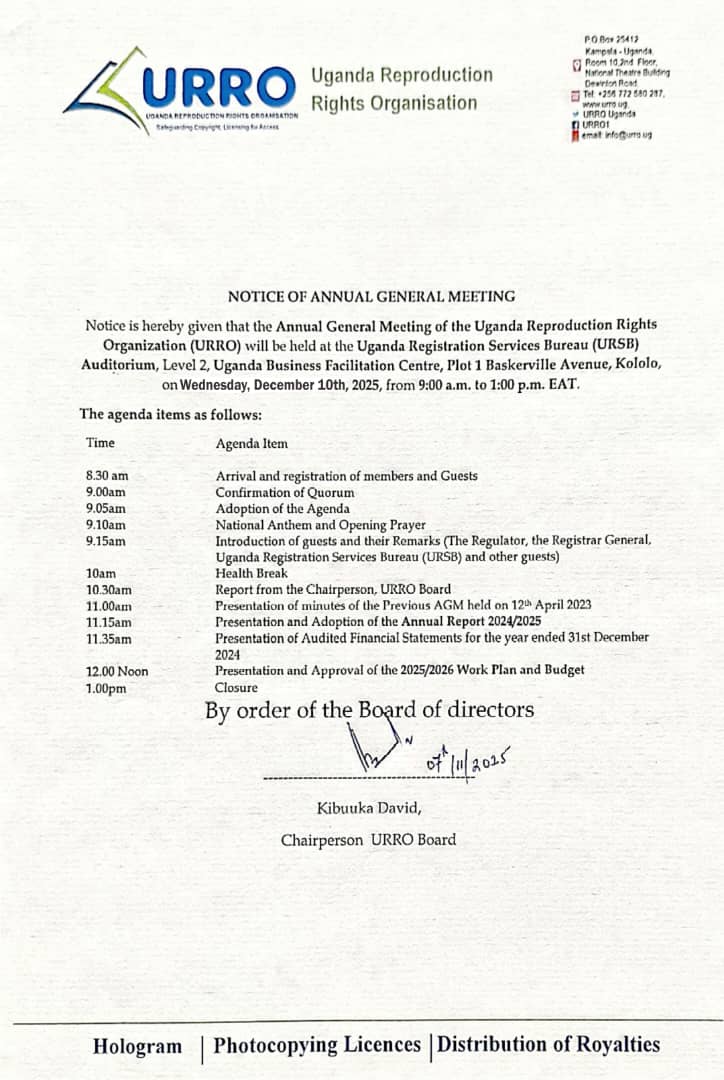
NOTICE OF ANNUAL GENERAL MEETING
Q&A with George Steven Okotha

Author of “Perseverance is Key: My Journey Through Life and Work”

Introduction
George Steven Okotha is a retired chartered insurer, economist, statistician, farmer, and now author. His story is one of resilience, transformation, and purpose — a journey that bridges decades of professional excellence and personal growth. In this interview, he shares lessons from his life in insurance, retirement, and writing.

Q1. For those who may not know you, who is George Steven Okotha?
A: I’m George Steven Okotha, retired but not tired. I’m a statistician, economist, chartered insurer, farmer, and now author. I studied at Kirewa Primary School in Tororo, Ngora High School for O-Level, Busoga College Mwiri for A-Level, and later Makerere University, where I earned a Bachelor of Science in Statistics and Economics.
My professional career began at the National Insurance Corporation (NIC), where I worked for 13 years before joining the Uganda Insurance Commission, now the Insurance Regulatory Authority (IRA). I retired in 2018 and currently serve as a member of the Insurance Appeals Tribunal and as Chairman of the Board of Directors for the Kenya National Assurance Company (Uganda) Ltd.

Q2. Looking back on your long career in insurance, what achievements are you most proud of?
A: Several milestones come to mind. Achieving the Chartered Insurer status from the UK’s Chartered Insurance Institute is one. I’m also proud of being part of the pioneer team that established the Uganda Insurance Commission in 1996 together with the late F.F. Magezi. That laid the foundation for today’s well-regarded insurance sector.
Another highlight was coordinating the Chartered Insurance Institute (UK) examinations in Uganda for 20 years, benefitting more than 380 candidates who passed under my supervision without a single leakage. I’m equally proud to have retired honourably, transitioned into farming, and authored the textbook Insurance Management for the diploma program at the Insurance Training College of Uganda.

Q3. What values or principles guided you throughout your career?
A: Hard work, integrity, professionalism, and mentorship. Integrity stood at the centre of my work, especially when handling international examinations and regulatory duties. I also believed in mentoring others to ensure continuity. To this day, I’m proud that the team I left at the Insurance Regulatory Authority continues to perform excellently.

Q4. How did your work in insurance prepare you for life after retirement?
A: My work taught me planning and discipline. I knew retirement would come, so I began preparing early. I discovered my passion for farming during a work trip to Zanzibar, where I visited a spice garden and learned about cinnamon. That experience inspired me to start growing cinnamon, cocoa, and soursop.
When I retired, I expanded into nursery farming for cocoa, cinnamon, and Ashok trees. For me, retirement was not the end; it was a new beginning built on preparation and purpose.
Q5. Many people struggle with retirement. What lessons can they draw from your experience?
A: Plan early and view retirement as an opportunity, not an end. Too many people retire unprepared because they don’t even check their appointment letters to know when their contracts end. I had already mapped out my next chapter.
When I retired, three insurance companies offered me CEO positions, but I declined. I felt it was time to work for myself after years of working for others. That decision brought me peace, fulfilment, and independence.

Q6. You’re also active in Rotary. How has that shaped your personal growth and writing?
A: Rotary has been a training ground for service, leadership, and continuous learning. It sharpens one’s time management, networking, and community engagement skills. Through Rotary, I met people like Rotarian Betty, who later became my book consultant. Rotary’s spirit of service and fellowship also inspired me to write this book to serve others through my story.

Q7. What inspired you to write Perseverance is Key?
A: My life story. I grew up poor, lost my mother early, and was raised by stepmothers. I faced hardship through school, work, and even personal tragedy, including single parenting and several accidents in a plane, train, and car.
Despite everything, perseverance saw me through. I wrote this book so that readers, especially those facing difficult times, can see that it’s possible to overcome through faith, discipline, and persistence.

Q*8. Who do you hope will read this book, and what do you want them to take away from it?
A: I hope parents, students, and professionals will read it. Parents should buy it for their children because it shows that success requires struggle and patience. Students will learn to take education seriously and not lose hope when things get tough. Professionals will see that integrity and perseverance pay off.
The book covers themes of schooling, marriage, parenting, and survival. It is both a life story and a guide for self-development.
Q9. You’ve mentioned surviving several accidents. Could you tell us more?
A: Yes, I survived two plane accidents and one train accident, among others. Those experiences deepened my gratitude for life and strengthened my belief in perseverance. That’s why I share them in the book, to remind readers that giving up should never be an option.
Q10. What message do you have for today’s professionals and entrepreneurs in Uganda?
A: Persevere, persevere, and persevere. Success is often just around the corner. Many give up too soon. Even in farming, I’ve had to persevere through challenges like market access and crop maturity. Perseverance doesn’t end when you retire; it’s a lifelong companion.
Q11. When is your book launching, and what can readers expect?
A: Perseverance is Key will be launched on 5th November. It’s a major milestone for me, a product of reflection, resilience, and gratitude. Readers can expect an inspiring and practical life guide. I call it a training school because once you read it, you won’t remain the same.
Q12. What’s next for you after this book?
A: My next project is a book focused entirely on retirement to help Ugandans plan wisely and live meaningfully after formal employment. I see too many people retiring in distress simply because they didn’t plan. I want to change that.
Q13. Do you have a favourite book or one that has inspired you?
A: One book I always remember is Sincerity Divorced by Edward Hinga. It left a lasting impression on me and shaped some of my thoughts on integrity and personal perseverance.
Q14. Finally, what word defines you today?
A: Integrity. It has carried me through every stage of life. My motto remains, “Perseverance is key.”
And yes, as I speak to you now, I’m sipping cinnamon tea from my own farm. That’s a taste of fulfilment, gratitude, and peace.
About the Book
Title: Perseverance is Key: My Journey Through Life and Work
Author: George Steven Okotha
Launch Date: 5th November
Themes: Integrity, Perseverance, Career, Retirement, Faith
Availability: To be announced at the official launch event.

💡 Enjoy better copyright protection — become a member at www.urro.ug

Q&A with Florence Lusiba, Bookseller and Distributor at Gustro Ltd

Q1. For those who may not know you, who is Florence Lusiba in a few words?

Florence Lusiba is passionate about promoting reading at every level—in the classroom, library, and home—because reading inspires students to learn better, be creative, and develop critical analytical thinking skills. My academic background is rooted in the sciences, with a degree in Chemistry from the U.S.A., complemented by a minor in English, where I explored creative writing and poetry. I began my career as a Chemist but later pivoted to the business sector after earning a master’s degree in business administration. I now serve as the Marketing Manager of Gustro Ltd, a company specializing in the wholesale and retail distribution of genuine educational books to bookshops, schools, and institutions, ensuring end-users receive competitive prices.

Q2. You have been involved in bookselling for a long time, working with your father at Gustro Ltd. What drew you personally to this work?

I was fortunate that my father fostered a strong interest in our academic performance from a very young age. He introduced us to storybooks and readers early on, ensuring we visited the library during school holidays to borrow books of our choice. This strong foundation, coupled with his close monitoring of our school performance, instilled in me the value of educational materials. When I joined him in bookselling, the transition was natural, as we share a common goal: ensuring that children and students in higher institutions of learning have access to the quality textbooks, reference books, and journals they need for academic success.

Q3. Can you tell us more about Gustro Ltd and Gustro Book Centre—what services you offer and how you serve authors, publishers, and readers?

Gustro Ltd is a private incorporated company operating out of the five-story Gustro Book Centre on Sir Apollo Kaggwa Road in Old Kampala. We specialize in the wholesale and retail of educational books. We ensure all books we handle have a registered ISBN to confirm they are genuine, as we strictly do not deal in pirated books.

The layout of the Gustro Book Centre is structured to serve our diverse clientele:

Ground Floor: Dedicated to wholesale and stores, serving bookshops in Kampala and upcountry.

1st Floor: The retail department, featuring a wide display that serves schools and parents directly.

2nd Floor: Houses Vast Publishers and rental offices.

3rd Floor: Displays a wide range of Tertiary books, including Business, Medical, Nursing, and I.T. titles.

4th Floor: Administration offices.

Gustro Ltd functions primarily as a distribution hub for educational books, sourcing and supplying material written by various authors and publishers for the Uganda Curriculum to schools, NGOs, and the Ministry of Education. We are truly a one-stop centre for educational books.

Q4. Gustro represents many foreign publishers. How does this partnership work, and what does it mean for readers in Uganda?

Gustro proudly distributes books for major international publishers such as Oxford University Press, Cambridge University Press, Elsevier, Penguin, and Taylor and Francis. Our stock includes a wide array of resources like dictionaries, thesauruses, atlases, subject books, readers, novels, and tertiary materials. We also stock new curriculum books like the Active series from Oxford University Press East Africa, African Literature books from East African Educational Publishers, and various revision books.

Our strong partnerships with international suppliers, who offer us reasonable credit facilities for overseas books, are key. This arrangement allows us to provide Ugandan readers with an extensive variety of high-quality reading materials, ranging from classics and Shakespeare to new releases from African and European authors, as well as popular series like Bookworms and Penguin Books.

Q5. You have also been part of efforts to fight book piracy in Uganda. What has been your role in this struggle, and what challenges do you see ahead?

Piracy remains a significant challenge, with our bestsellers often being counterfeited and sold to unsuspecting buyers during the peak season. Gustro Ltd’s primary role is sensitization. We actively work to educate schools about the difference between pirated and genuine books through emails and WhatsApp messages, while also reminding them about copyright law which protects the intellectual property of authors and publishers.

Publishers help combat piracy by regularly printing new editions, which encourages schools and parents to purchase books with the most updated information. We also advocate for publishers to use holograms supplied by the Uganda Reproduction Rights Organisation (URRO) to mark genuine books. However, a major challenge is that pirates often mimic these security procedures, confusing the consumer and making it difficult to curb the vice.

Q6. You often conduct outreach activities to promote books and reading. Could you share some of the initiatives you are most proud of?

I am most proud of the Book Week and Book Club events we have championed in schools and community centres. These initiatives promote group reading and discussion of stories and novels. During Book Week, a school dedicates a week to a specific theme (like environment or recycling), and students engage in reading books, writing stories, and performing activities based on that theme. Gustro and other booksellers, including authors, are invited to display and sell books, engaging directly with parents and students. These school interactions are often our most successful business points.

The Book Clubs proved especially vital during the COVID-19 school closures. We managed to deliver assortments of readers and workbooks to different homes. Children in the neighbourhood could safely collect, read, and exchange these books (while masked), maintaining their reading habit when libraries were inaccessible.

Q7. With the rise of digital platforms and e-books, how do you see the future of bookselling and distribution in Uganda?

The digital shift is significant, yet currently, only 27% of Uganda’s population has access to internet services. E-learning platforms, like those offered by NCDC, have been crucial, especially during COVID-19, but their reach is predominantly limited to urban areas with reliable internet and access to digital devices (tablets, laptops). Booksellers work with publishers to connect these e-learning packages to urban schools, and the distribution of digital platforms will certainly grow as internet access expands nationwide.

However, textbooks and physical readers will remain essential for rural schools that lack reliable internet service and digital devices. Therefore, booksellers will continue to be relevant in supplying the bulk of educational materials. While some NGOs provide online services to rural schools, this remains a private, project-based arrangement and not a systemic change.

Q8. How is Gustro adapting to the digital shift—whether in marketing, distribution, or engaging with readers online?

Gustro Ltd utilizes online marketing by maintaining a professional website that details the publishers we distribute for and provides a link to our catalogue. This allows customers to view and select their required books. Additionally, we use a WhatsApp Business catalogue, enabling customers to easily browse and select dictionaries, readers, and literature books directly on their phones from Gustro Book Centre.

While we provide e-books to international schools on an on-demand basis, the majority of schools in Uganda, especially outside the few private institutions, still rely heavily on hard-copy textbooks and readers as the main mode of instruction and learning. Our strategy therefore focuses on enhancing hard-copy distribution while using digital tools to streamline marketing and ordering processes.

Q9. In your view, what are the biggest opportunities for booksellers and distributors in Uganda today?

The biggest opportunities are driven by market demand for localized services, particularly as head teachers and teacher associations increasingly establish bookshops within schools. To capitalize on this, booksellers and distributors should focus on two key areas:

Strong Partnerships with Schools: Offering schools a variety of approved books and ensuring quick, reliable service delivery at competitive prices. Booksellers can also partner with schools during major events like Book Week or Visitation Days, bringing services directly to the users.

Strengthening the Uganda Booksellers Association (UBA): Enhancing unity and networking among booksellers builds trust with publishers—our suppliers—and ensures customers can source the books they need from any bookshop across the country.

Q10. What challenges do booksellers face in this market, and how can they be addressed?

The main challenge booksellers face is the lack of regulation or a comprehensive Book Trade Policy. This regulatory vacuum contributes to three critical issues:

Counterfeit Books: A surge of counterfeit books floods the open market during the peak Back to School season. Since they are cheaper, they compete unfairly with genuine books and significantly reduce sales for legitimate bookshops.

School Photocopying: Schools often buy a single copy of a textbook, then use in-house photocopy machines to create and sell unauthorized, low-quality copies to students. This is an illegal violation of copyright and results in students receiving poorly printed materials.

Competition from Schools: Schools setting up internal bookshops compete directly with professional booksellers. Furthermore, publishers supplying books to schools at the wholesale prices reserved for bookshops disrupt the established book distribution chain.

These challenges can be addressed by the Ministry of Education establishing a clear Book Policy (often referred to as an “Orange Book” in places like Kenya). This policy would provide strict guidelines for schools, listing approved textbooks per publisher, vetted prices, and requiring that orders be placed through the bookshop chain. Such a policy would enforce standards, reduce overpricing, and curb the sale of pirated books.

Q11. As someone who has grown up in the book trade, what lessons have you learned from your father, Augustine Lusiba, about business and passion for books?

My father is deeply passionate about education and has always sought out the best educational materials through strong partnerships with both international and local publishers. As the first Chairman of the Uganda Booksellers Association, he demonstrated the importance of community by travelling with his team to different National libraries to explore ways to improve reading and library services regionally.

From him, I have learned that success is built on:

Partnerships and Collaboration: Building strong, collaborative relationships with all stakeholders, including suppliers, customers, and networking with associations.

Core Values: Working hard with integrity, honesty, consistency, and maintaining continuous specialization in bookselling. These values have been Gustro’s foundation for growth.

Financial Discipline: As an accountant, he stressed good accounting principles, including meticulous record keeping, documenting and posting all transactions in the business system, and timely payment to suppliers, with clear communication in case of delays.

His key principle is maintaining good communication with staff, customers, suppliers, and service providers to identify and correct gaps early, ensuring consistently excellent service.

Q12. What advice would you give to young people who want to get into bookselling or distribution?

My advice is to first volunteer or intern at a bookshop or publishing house. This hands-on exposure is crucial for understanding the complexities of bookselling, publishing, marketing, and distributing academic or leisure books through the established chains.

They must understand that the book business in Uganda is seasonal—peaking during the Back to School period—and constantly faces challenges from piracy and illegal photocopying. Therefore, continuous training and sensitization of school leaders, teachers, students, and parents is necessary to generate substantial, ethical sales.

A positive development is the growth in self-publishing, attracting creative talent from all generations who are documenting their history, stories, and expertise in educational and self-help books. This signals a positive shift in the reading culture. I would encourage the youth to be innovative and form more reading hubs or clubs that offer discussion and entertainment on diverse book topics. These hubs can boost cultural tourism, strengthen the reading culture, and provide opportunities for authors to connect with the public through book signings and events, ultimately driving more book sales.

Q13. Beyond work, what personal passions or values drive your involvement in the book industry?

My personal history with reading, including enjoying series like Enid Blyton, Nancy Drew, and Hardy Boys, alongside African literature classics, informs my passion today. In hindsight, I wish I had had more access to locally written leisure series, like Barbara Kimenye’s Moses series, that captivated young Ugandan readers.

My main personal passion is seeing the younger generation read a wide variety of books and novels that ultimately inspire their own creativity as writers. I want to see more novels written by Ugandans, about the Ugandan experience. I am proud that schools are now supporting reading and book week events, and that young people are writing and launching their own storybooks, inspiring their classmates. At Gustro, we actively encourage parents to bring their children in to buy diverse readers, and I participate in training sessions on why reading is important—it exposes you to the world, fosters creativity, and develops analytical thinking, enabling you to write your own book and help improve society.

Q14. Finally, what message would you like to leave with authors, publishers, and readers about the role of booksellers in building a reading culture in Uganda?

Booksellers will continue to be vital, serving as a one-stop centre where customers can purchase an assortment of academic books from various publishers, alongside readers, novels, and leisure books from a multitude of authors. This unique position enables us to bring reading resources physically closer to users across the country.

The book market is changing. While new O-level curriculum books are available, the reading culture is also growing to reflect societal changes. Readers are connecting with information globally and buying books that address personal experiences, whether in soft or hard copy. There is also a major shift in schools from purely academic materials toward skill-based and vocational books that are learner-based. These resources empower students to apply skills practically in their daily lives and create their own jobs.

The reading culture is specifically growing with the promotion of self-help books, local creativity in fiction and non-fiction, and innovative books on value addition in sectors like agriculture and oil, all of which are seen as opportunities to improve youth employment. My 2024 sponsored visit to the Sharjah International Book Fair, also known as the Sharjah Booksellers Conference, in the UAE, confirmed that bookselling is a global village. To benefit from this global industry, we, as a country, must create more reading and discussion spaces and events to share new, innovative products, online platforms, and distribution techniques that reflect the changing demands of our consumers.

Q&A with Beatrice Babirye, Publisher and Founder of Vast Publishers Uganda Ltd

Q1. For those who may not know you yet, who is Beatrice Babirye in a few words?

A. Beatrice Babirye is the Managing Director of Vast Publishers Uganda Limited. I am an accountant by profession, a mother and a wife.

Q2. What inspired you to enter the publishing industry, especially knowing it has been largely male dominated in Uganda?

A. My childhood dream was to become a teacher. During my S.4 vacation, I volunteered to teach at a certain school in my village. During that period, I needed good books to complement my teaching but there were hardly any. My turning point was when I became a mother and finding good clean reading material proved difficult. So when the publishing opportunity presented itself, I took it by the horn.

Q3. You recently took over the stake of Moran Publishers (formerly Macmillan) to establish Vast Publishers Uganda Ltd. What motivated this bold step?

I had previously worked with Macmillan and Moran Uganda Publishers Limited. When the opportunity to take over the stake presented itself, I realised that I was the most suited candidate to take it to the next level. It would also give me a chance to write books in the way that I had imagined and wanted.

Q4. Can you tell us more about Vast Publishers Uganda Ltd—its vision, areas of focus, and what makes it unique in the Ugandan publishing landscape?

A. Vast Publishers Uganda Limited is a private limited company that specialises in commissioned and non-commissioned publishing for all educational levels. With a tag line of “excellence with a passion” our vision is to be the leading and most reliable publisher of quality educational materials within the East. Africa and beyond. Our uniqueness stems from our core values of growth through creative invention and innovation and integration of honesty into all aspects of our business functions.

Q5. Your company is already supplying educational books and competing for government textbook tenders. What has this journey been like so far?

A. Competing for government textbook tenders has been rewarding but also challenging. It’s rewarding in the sense that the government buys in bulk, so money comes in bulk. It’s also a marketing strategy in itself. Schools get to know and trust books that have been approved by the government. The challenge has been call-off orders that are issued in a phased manner and late payments that make business forecasting difficult.

Q6. What challenges have you faced as a woman publisher in this space, and how have you managed to overcome them?

The female gender has usually had its share of discrimination in whatever field. Being a woman does not mean less able. The fact that most women are inadvertently nurturing gives us an edge in many businesses, including publishing. Women tend to be more meticulous, which is a very necessary aspect in publishing. I have managed to overcome stereotyping by sticking to my former school motto of “Never give up” and borrowing the former US president Baraka Obama’s campaign slogan of “Yes you can”.

Q7. How do you see the future of publishing in Uganda, especially in terms of opportunities for local publishers?

The future of publishing in Uganda is bright. More users are demanding locally written material. So yes, the opportunities are there.

Q 8. What role do you think publishers like yourself can play in shaping the education sector and promoting Ugandan content?

Publishers like myself should write everything Uganda. Many authors from African countries are now writing content inspired by their reality. Often telling their stories through their lived experiences, speaking their “Africanacity”. When we write and teach our children and future generations content they relate to, we widen awareness of our Ugandan content.

As such, we should encourage the use of local authors and local content and even illustrate using known local materials.

Q9. Who or what has been your biggest inspiration or support system in this journey?

My family has been my greatest inspiration and support system. It can get very demanding, especially when we are preparing for bid submissions. During this period, it’s not uncommon to leave office after midnight; their support has gone a long way in making my work successful. My staff have also moved this journey with me, and I appreciate them for that.

Q10. What advice would you give to young women or aspiring entrepreneurs looking to break barriers in male-dominated industries?

There is nothing they can fail to achieve with commitment and integrity. As women, we have some catching up to do in so many sectors, and although it’s important to work hard, it’s even better to work smart. Teamwork and listening to opinions of staff is important and creates an empowering work atmosphere, which translates into thirst to excel. But above all, pray to God for guidance and favour.

Q11. Beyond business, what personal values or passions drive your work?

Integrity, honesty, and compassion are at the top of my personal value chain.

Q12. Finally, what message would you like to leave with readers about your journey and vision for Vast Publishers?

It’s never too late to chase your dreams or change careers. As long as you have the passion and commitment, the rest is background noise.

Vast publishers’ vision is to be the most reliable publisher of quality educational material within East Africa and beyond and we aim to achieve this.

Lets dive deeper into my story “Love Wins’. During our Q&A Session:


Mr. Batambuze Charles, Executive Director of Uganda Reproduction Rights Organization (URRO) and Executive Secretary of the National Book Trust of Uganda (NABOTU). As a champion for Creators’ Rights act Advocate for the literary community, Mr. Batambuze Poses thoughtful questions to me, exploring the theme, inspiration and insights behind the book.

Q: Who is Lydia?

A: Lydia also known as Nantumbwe Norah, is a Ugandan born to the late Mr. and Mrs. Sepiria Busuulwa.
I am happily married and bear my husband’s name, Yiga. As a born again believer in Christ Jesus, I’ve been called to share God’s love through my passions – Gospel Singer, and now authoring books.

Q: What Inspired you to write your first book?

A:. My book is a testimony born out of my journey through a challenging period in my Marriage. After a five years separation, God graciously restored our relationship. During that time, I searched for books that spoke to my experience but found a few. This inspired me to write my story, hoping to encourage others facing similar struggles.

Q:. Why did you choose the title – Love Wins?

A:. I chose the title “Love Wins” because it reflects the unwavering nature of divine love. Unlike human love, which can falter due to emotions, divine love – as embodied by God (1John 4:8) – Love never fails ( 1 Corinthians 13:8). For me, “Love Wins” symbolizes God’s triumph in my Life, particularly, in my restored Marriage.

Q:. What message do you hope readers will take away from your book?

A:. My hope is that readers will take away a message of hope – that even when Marriage seems to have reached it’s lowest point, restoration is possible with God. As Scripture reminds us “With God all things are possible.” (Matthew 19:26). I pray that my story will inspire others to hold onto faith and never give up.

Q: What challenges did you face while writing your first book?

A:. Writing my first book was challenging on several levels. Initially, I faced discouragement from sharing my past experiences especially – since my Marriage had been restored and I thought it was best left behind until I felt the Holy Spirit’s conviction, and I focused in writing. However, as I began writing, I found it emotionally taxing to revisit painful memories, and there were times when I couldn’t resist tears. The process was therapeutic, but also difficult. Additionally, I struggled with noise disturbance from the surroundings, which made it had to focus and find the serenity I needed to write. To cope with the noise, I even resorted to putting cotton in my ears to block out the distractions and create a semblance of quiet.

Q:. How do you feel as you get ready to launch your very first book?

A:. As I prepare to launch my first book, I’m overwhelmed with a mix of emotions – excitement, gratitude, and a hint of disbelief. It’s surreal to see my story, my testimony, in print, knowing it’ll soon be in the hands of readers. The feeling is indescribable but it’s a beautiful blend of joy anticipation, and thankfulness for this milestone.

Q:. What can readers expect during the launch in October?

A:. During the book launch in October, readers can expect an exciting, and unforgettable celebration. We’ll have a Q&A where you can ask about my book, writing journey, or inspiration. We’ll also have some special elements to enhance the experience, including music and poetry, which will add to the warmth and joy of the evening. You will have the opportunity to connect with fellow Book lovers, purchase my book, we’ll have a session of Book signing, and enjoy refreshments while we capture memories through photography to share in social media.

Q:. What is next for your after “Love Wins?”

A:. After “Love Wins” I’m excited to share that I have several more books in the pipeline, exploring themes of Marriage, relationships, and personal growth. These upcoming tittles will delve deeper into real life experiences, offering insights, hope, and inspiration to readers.

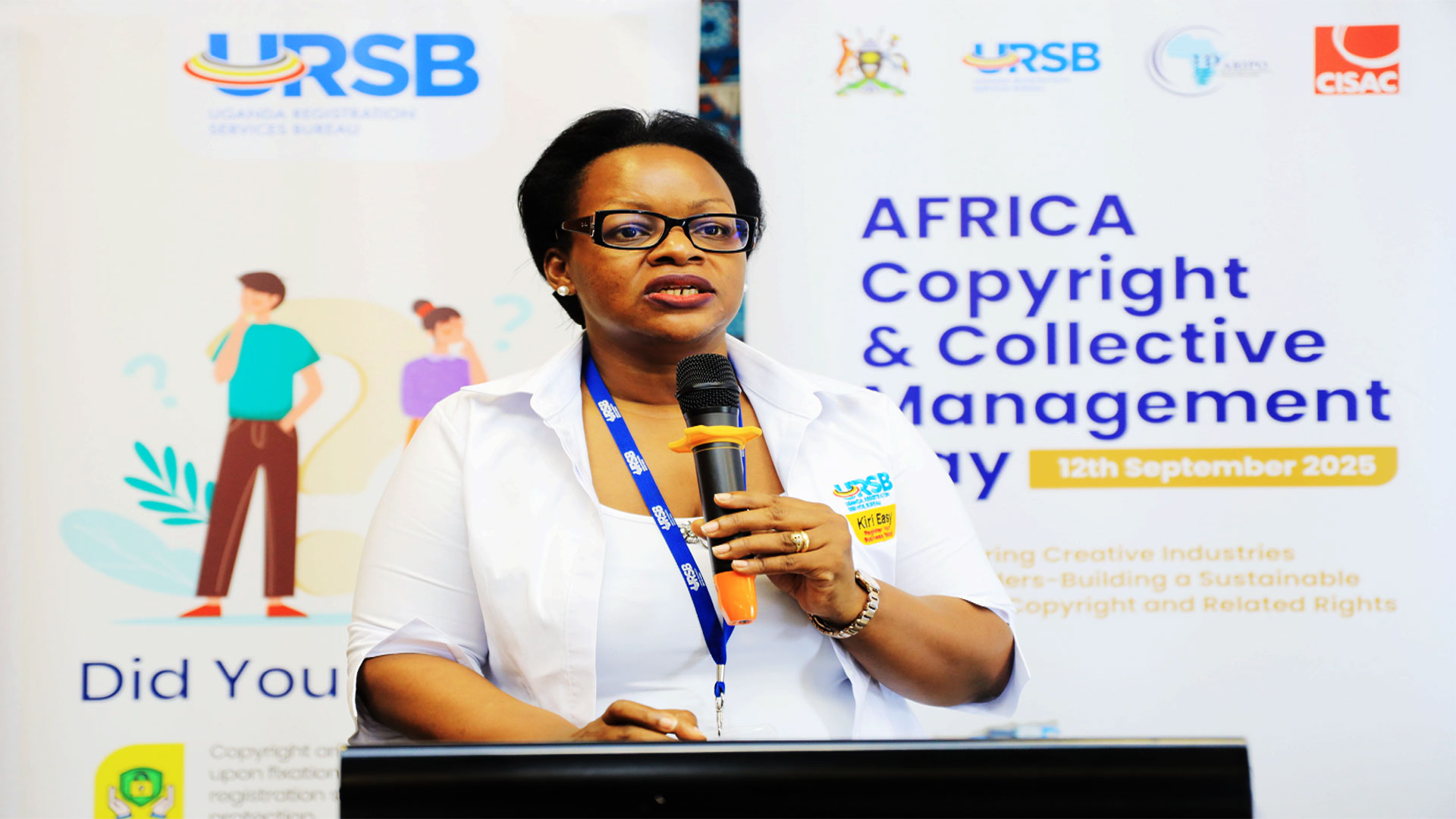
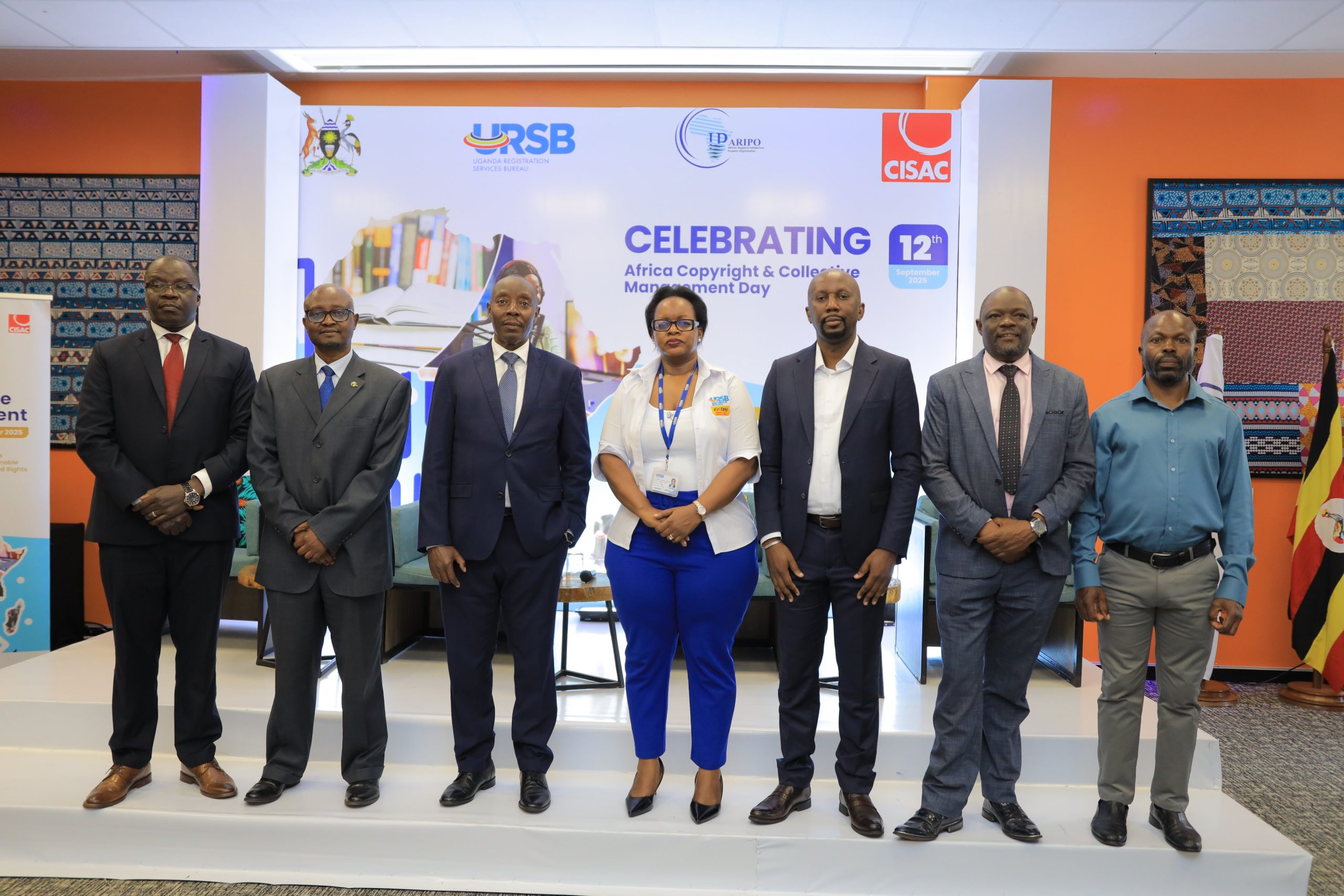
Africa Copyright & Collective Management Day

“Creativity is like a plant that needs to be tended to. It is watered so that it doesn’t wither. For us as government we have to ensure that creativity is protected. Creativity flourishes where it is protected.” – Ms. Mercy K. Kainobwisho, Registrar General

Uganda continues to recognize the creative sector as a cornerstone of our Social-Economic transformation.

“As we celebrate this special day, it is important to remind ourselves that the creative economy can help diversify production, build a competitive advantage, attract investment, support entrepreneurship & innovation, promote cultural diversity, and enhance overall well-being.” – Mr. David Njuguna, Director of Intellectual Property, ARIPO

“A sustainable future for our creatives depends on accountability, transparency, and innovation of CMOs. By valuing copyright and leveraging technology, we can ensure that every creator receives the recognition and reward they rightfully deserve.” – Mr. Robert Kasande, Permanent Secretary, Ministry of Justice and Constitutional Affairs.

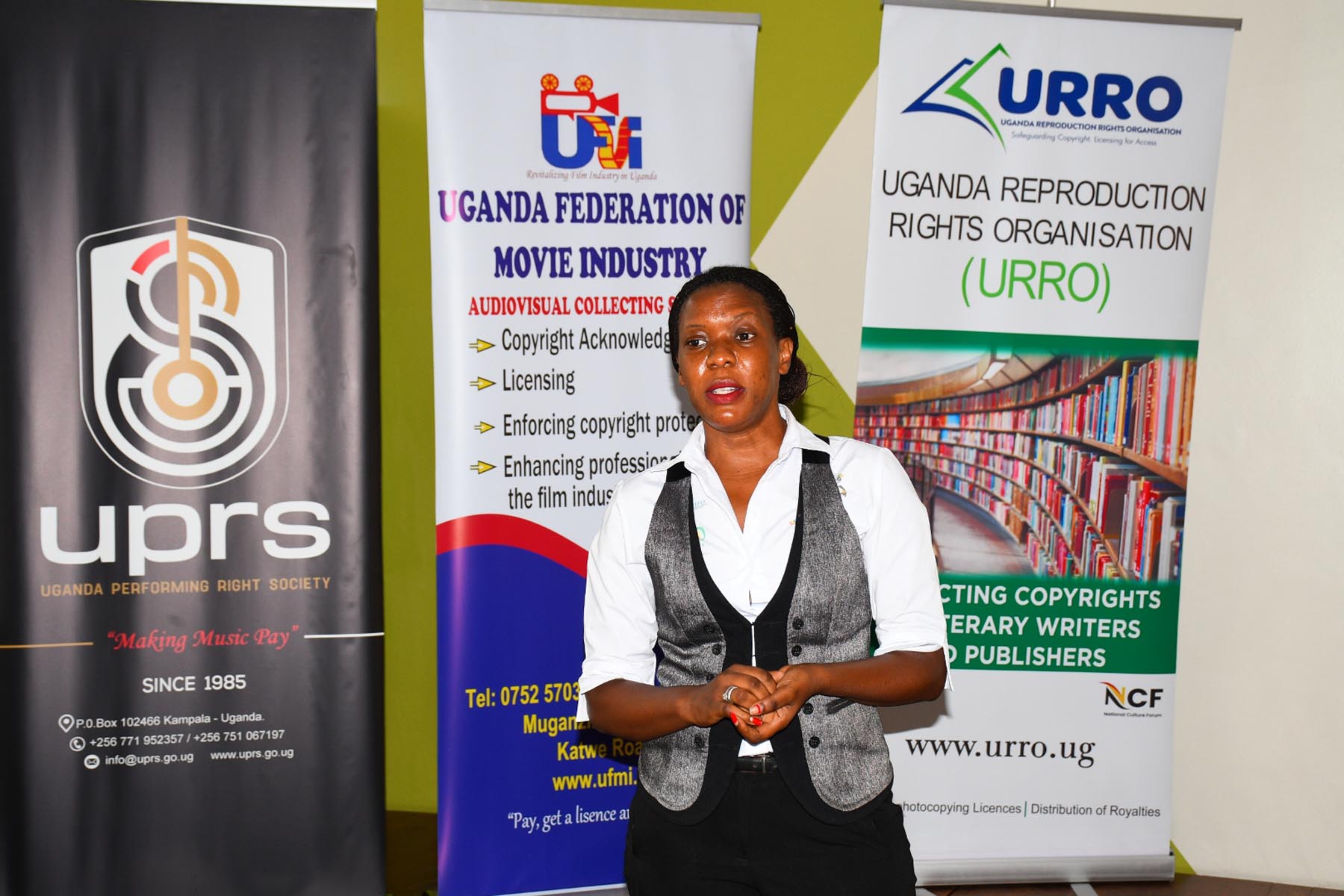
Mr. Samuel Sangwa, CISAC Regional Director – Africa, educated the participants on the role of CISAC in collective management, “CISAC protects the rights and promotes the interests of creators worldwide as well as enabling CMOs to seamlessly represent creators and ensure that royalties flow to authors for the use of their works anywhere in the world.”