
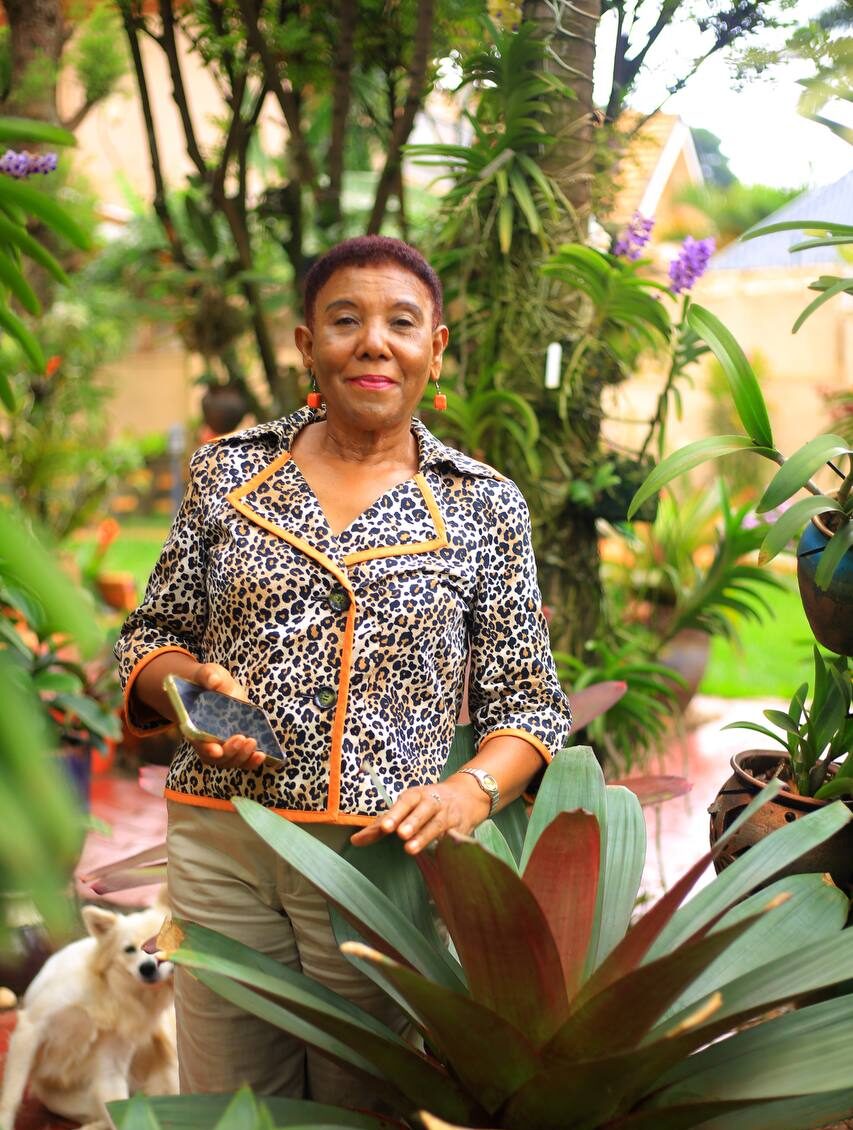

Author, Mentor, and Nature lover.
Theme: Coping with Identity Crisis — Grow. Thrive. Heal: The Transformative Power of Nature.
Q1. You describe yourself as a person of multiple heritage — a Muchotala / coloured who chose to identify as a Mukiiga. How has this complex identity shaped your personal journey and the stories you tell as a writer?
Ans.
I am happy to share my story, what an intriguing question. My story is about the challenges of Growing up with multiple heritages that can be like navigating a lush garden with diverse, vibrant flora – it’s beautiful yet complex. Each flower represents a different part of my identity, and I’ve had to learn to appreciate the unique beauty of each one. As a Muchotala/coloured person who chose to identify as a Mukiiga, I’ve had to navigate the intricacies of belonging and self-discovery.
My life is like a Lotus flower, symbolizes my resilience in the face of adversity, blooming in the muddiest of waters yet remaining strong. Like the delicate petals of a Cherry Blossom, my identity has been shaped by the fragility and beauty of cultural heritage. The thorns of a Rose represent the challenges I’ve faced in a society bound by traditional expectations, particularly around gender roles.
Through the seasons of life, I’ve faced many challenges – struggles in school, job loss, marriage, and business struggles. But like the Sunflower’s ability to follow the sun, I’ve learned to focus on growth and find strength in adversity. My story is one of growth, thrive, and heal – and I believe that nature has been a constant source of inspiration and solace in my journey.
As I reflect on my experiences, I’m reminded that the complexity of my heritage is not a weakness, but a strength – a vibrant tapestry of experiences that make me who I am today. Through my writing, I hope to inspire others to find their own path, just as nature has inspired me While coping with the identity crisis, to grow, thrive, and heal.”
Q2. You spent your early career years in Nairobi in the 1980s, working with the external wing of the NRM/A. How did that period of exile influence your worldview, and do those experiences appear in your writing today?
Ans.
“My time in Nairobi in the 1980s, working with the external wing of the NRM/A, was a pivotal period in my life. As a young activist, I was driven by a desire to contribute to the empowerment and freedom of my people, particularly women. I recall the struggles and challenges we faced, but also the sense of purpose and camaraderie that came with working towards a common goal.
That experience not only shaped my worldview but also influenced my writing. I draw inspiration from the resilience and determination of the people I worked with, and the struggles we faced continue to inform my perspective on social justice and human rights. My experiences have taught me the importance of amplifying marginalized voices, particularly those of women and girls who were often overlooked or underrepresented.
In today’s world, I firmly believe that gender equality and empowerment are fundamental to creating a just and equitable society. An empowered woman can tackle big challenges, but when paired with a man who isn’t empowered or is bound by stereotypes and conservative ideologies, it can be even more daunting. That’s why it’s crucial to work on empowering both men and women, challenging patriarchal norms, and promoting a culture of mutual respect and understanding.
As a writer, I aim to contribute to this narrative, highlighting the strength and agency of men, boys, women and girls, and exploring the complexities of relationships and power dynamics. My experiences have shown me that when men and women are both empowered, communities thrive, and I believe that this message is more relevant now than ever. By working together to challenge stereotypes and promote gender equality, I believe we can create a more just and equitable world for all.”
Q3. Later, you worked in the President’s office, What lessons did you carry from that chapter of public service into your creative and mentoring life?
Ans.
“Working in the President’s office was a transformative experience that taught me valuable lessons about leadership, governance, and the human side of policy-making. One of the key takeaways was the importance of humility, understanding, and effective communication in building strong relationships and achieving personal growth. I learned that true leadership is not about titles or power, but about serving others and making a positive impact.
These lessons have stayed with me in my creative and mentoring work. I’ve come to realize that humility, empathy, and strong communication are essential in understanding people’s needs, building trust, and fostering meaningful connections. As a writer, I’ve learned to approach my characters and stories with a deeper understanding of the human condition, and to craft narratives that reflect the complexity and beauty of life.
But one of the most profound lessons I’ve learned is that you don’t need to be famous, hold a high-ranking office, have a string of degrees, or be wealthy to make a real impact on people’s lives. I’ve seen firsthand that ordinary people can do extraordinary things when they are passionate, dedicated, and committed to making a difference. This realization has humbled me and inspired me to focus on the work that truly matters – touching lives, telling stories that need to be told, and empowering others to find their path”
Q4. When you retired from office, you chose a completely different path — micro finance, mentoring and creating beautiful spaces, What drew you to these activities and how do you find healing or inspiration through nature?
Ans.
“After leaving office, I felt a void that couldn’t be filled by the trappings of power or prestige. I yearned for meaning and purpose that came from making a tangible difference in people’s lives. Microfinance, mentoring, and creating beautiful spaces allowed me to do just that.
I was drawn to microfinance because I believe in the power of economic empowerment, especially for women. Seeing individuals and communities thrive through small loans and support is incredibly fulfilling.
Mentoring has been a privilege, allowing me to pay it forward and guide others on their own paths. I find joy in watching people discover their strengths and passions.
Creating beautiful spaces is my way of connecting with nature and expressing creativity. Nature has been a source of healing and inspiration for me. Being in nature reminds me of the beauty and wonder of life, and it puts things into perspective. The rhythms of nature teach me about patience, resilience, and the importance of living in harmony with the world around us.
Through these activities, I’ve found a sense of purpose and fulfillment that I didn’t know was possible. They’ve taught me that true wealth isn’t measured by title or bank balance, but by the positive impact we have on others and the world around us.”
Q5. Your work, “Coping with Identity Crisis — Grow, Thrive, Heal”, explores transformation through nature. Could you tell us about the message at the heart of this project?
Ans
“My books, ‘Coping with Identity Crisis’ and ‘Grow, Thrive, Heal: The Transformative Power of Nature’, explore the human experience and the power of nature to heal and transform. In ‘Coping with Identity Crisis’, I delve into the universal struggle of finding oneself and navigating identity complexities.
In ‘Grow, Thrive, Heal’, I share practical insights on harnessing nature’s power, from creating vibrant spaces to finding peace in green areas like parks and forests. I draw inspiration from Blue Zones, where people live longer and healthier lives, emphasizing the importance of integrating nature, community, and well-being into daily life.
By embracing these principles, we can cultivate a deeper sense of purpose and fulfillment. Nature has the power to calm the mind, soothe the soul, and awaken a sense of belonging. Through these books, I aim to empower readers to live a purposeful life , find peace, connection, and transformation in the natural world.”
Q6. Many Ugandans today struggle with questions of belonging and self-definition. How do you think art — and nature — can help us navigate those inner conflicts?
Ans.
“Art and nature have a profound ability to help us navigate inner conflicts, especially when it comes to questions of belonging and self-definition. Art allows us to express emotions, thoughts, and experiences in a way that transcends words. Through creative expression, we can tap into our inner selves, process our struggles, and gain clarity on who we are and where we belong.
Moreover, when we share our stories and experiences through art, it helps us understand our pain and find meaning in it. By telling our stories, we can validate our emotions, find closure, and connect with others who may be going through similar struggles.
Nature, on the other hand, offers a sense of perspective and connection to something greater than ourselves. Being in nature can be calming, grounding, and meditative, allowing us to quiet our minds and tune into our hearts. By spending time in nature, we can tap into its wisdom, find solace in its rhythms, and discover a sense of belonging to the natural world.
In Uganda, where we have a rich cultural heritage and breathtaking natural beauty, I believe that art and nature can be powerful tools for self-discovery and healing. By embracing our creative expression, sharing our stories, and connecting with the natural world, we can navigate our inner conflicts, find our true selves, and cultivate a deeper sense of belonging and purpose.”
Q7. As a mentor, what advice do you give to young people, especially women, trying to reconcile multiple identities or reinvent themselves after major life transitions?
Ans.
“To young people, especially women, navigating multiple identities or reinventing themselves after major life transitions, I’d say this: embrace the complexity. Don’t feel pressured to fit into predefined boxes or conform to societal expectations. Their identities are multifaceted, and that’s what makes them unique.
To Take time to explore, reflect, and understand what truly resonates with them. Allow to evolve, make mistakes, and learn from them. Surround themselves with people who uplift and support them, and not to be afraid to seek guidance from mentors or role models who inspire them.
Remember, reinvention is not about erasing the past but about building upon it. Celebrate their strengths, acknowledge weaknesses, and be kind to themselves throughout the journey. Their worth and identity extend beyond any single role or label.
Lastly, not to underestimate the power of self-care and compassion. Take care of their physical, emotional, and mental well-being. They are worthy of love, respect, and happiness, not just for who they are, but for who they are becoming.”
Q8. Looking back, what moments or decisions most defined who Ameria Momo Masiko has become today?
Ans.
“Looking back, I’d say it’s been a combination of key moments and decisions that have shaped me into the person I am today. One pivotal decision was when I refused to accept an early marriage at the tender age of 15. Instead, I chose to prioritize my education and pursue my dreams.
I’m deeply grateful for the unwavering support of my family, particularly my parents , siblings and other members, who encouraged me to be all that I could be. Their love, guidance, and trust in me have been instrumental in helping me navigate life’s challenges.
I’ve also been blessed with true friends and partners who’ve stood by me through thick and thin. Their support, encouragement, and belief in me have meant the world.
Throughout my journey, I’ve been driven by a zeal for continuous learning, seeking growth and development through experiences and knowledge. These elements combined have shaped me into a strong, resilient, and confident individual. I’m grateful of the person I’ve become and look forward to continuing to learn, grow, and make a positive impact.”
Q9. What are you currently writing or working on, and how does it build on your personal philosophy of “Grow. Thrive.
Ans.
“I’m currently working on empowering and inspiring individuals, especially young people, to discover their purpose and live a balanced life. My focus is on creating vibrant and beautiful spaces that foster happiness and fulfillment. I’m passionate about promoting the Wheel of Life model, which emphasizes the importance of faith, family, finances, friends, and fitness in achieving overall well-being.
Through my work, I aim to inspire continuous learning, growth, and self-improvement. I believe that by thriving in these key areas, individuals can experience healing, peace, and a deeper sense of purpose. Additionally, I emphasize the importance of developing resilience and coping skills to navigate life’s challenges and adversity. I teach people how to accept mistakes, learn from them, and use them as opportunities for growth.
My goal is to help people live their best lives, surrounded by positivity, joy, and meaningful relationships. You can find my work in my books, including “Coping with Identity Crisis” and “Grow, Thrive, Heal: The Transformative Power of Nature.” I’m also active on various social media channels, including WhatsApp, LinkedIn, Instagram, and Facebook, where I engage in group discussions and one-on-one conversations, sharing insights and inspiration to support their journey towards growth and fulfillment.”
Q10. Finally, if you could summarize your life’s journey in one flower — which would it be, and why?
Ans.
That’s lovely!
If I had to summarize my life’s journey in one flower, I would choose the Orchid.
The Orchid represents elegance, resilience, and adaptability – qualities that have defined my journey. Just like the Orchid, I’ve learned to thrive in diverse environments and circumstances, and I’ve come to appreciate the beauty of uniqueness and individuality.
The Orchid’s delicate yet strong petals remind me of the importance of staying grounded and resilient in the face of challenges, while also embracing my own beauty and uniqueness. Its exotic and intricate beauty inspires me to help others discover their own unique strengths and talents, and to cultivate their own inner beauty.
Plus, Orchids are known for their ability to bloom in unexpected places, which resonates with my own journey of growth, transformation, and empowerment – proving that beauty and potential can emerge in unexpected ways.
~Senior Bata