URRO

Archives November 2025

Uganda Preproduction Rights Organization 2025 Annual General Meeting cancelled

Good afternoon Members,

This is to inform you that the Uganda Reproduction Rights Organisation (URRO) Annual General Meeting, which was scheduled for Thursday, 27th November 2025, has been postponed.

A new date will be communicated soon. We regret any inconvenience caused and appreciate your understanding.

Thank you.
URRO Secretariat

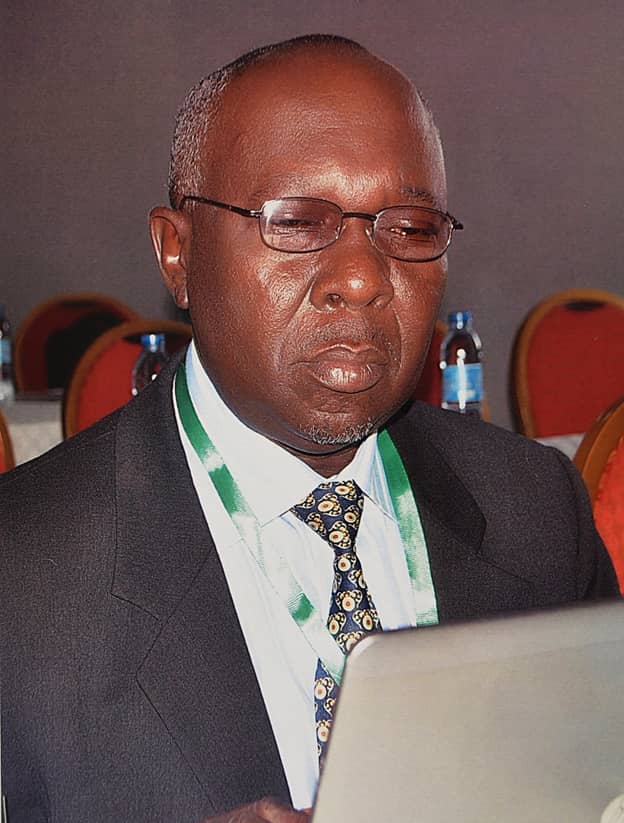
URRO Q&A WITH EMMANUEL N. MUKANGA:A LIFE ACROSS CONTINENTS, A VOICE ROOTED IN CULTURE

Emmanuel N. Mukanga’s writing reflects a life richly lived – across Uganda, Nairobi in Kenya, Dar es Salaam in Tanzania, Munich, Berlin and Hamburg in West Germany and beyond. His two-volume autobiography captures a journey through political upheavals, cultural transitions, and creative milestones. In Volume 1, he celebrates the deep cultural roots of the Samia of Kenya and Uganda. From coordinating the Makerere University Free Travelling Theatre to working as a producer and journalist at Uganda Television (UTV) and the Voice of Kenya Television (VoK TV), and being trained at Sender Freies Berlin, in TV Production, Direction and Editing, Mukanga has spent a lifetime shaping and sharing stories that bridge tradition and modernity.In this Q&A, he shares reflections on writing, exile, heritage, and what drives his life-long pursuit of storytelling.

Q1. Your autobiography unfolds in two volumes capturing a life that spans multiple Continents. What motivated you to tell your story so extensively?

A1. Initially in 1981, just over a year after my marriage to Lucy, we came from West Germany to Uganda for Christmas. I suggested to my elder brother, who had brought me up, that I was interested in writing his biography and gave my reasons why. I told him that he had led a colorful life right from university at Makerere, when he led students to demand that beer be sold on Campus and succeeded. Up till then, Africans were not allowed to drink bottled beer anywhere in the Protectorate. He then worked for a petroleum company, went into politics at local government level and eventually joined the first independence National Assembly in 1962, and became the Minister of Foreign Affairs the following year. When the Government he worked for was overthrown in 1971 by Idi Amin, he ended up in exile in Dar es Salaam and came back in 1979 after Amin’s removal. He went into business and was also chairman of the board of governors of The Milton Obote Foundation that owns Uganda House.However, my brother was not keen that I write his biography, so towards 2009, I realized that I too had led quite an interesting life in over 20 countries on 3 continents. That’s when I started putting pen to paper about my life, doing research and talking to elders who knew more than I did, about me, my family, my origins, my country, continent and the world at large.

Q2. When you look back at your youth in Uganda, what moments or experiences first awakened your love for story telling?

A2. As you may be aware, I was brought to Kampala from the village in Eastern Uganda when I was just 3 years old. I was then put in a nursery school at the Naguru Community Centre Hall, where I believe we were told stories and rhymes, though I wouldn’t remember any of them. When I went to Entebbe in P4 we were introduced to many stories, some of which were very funny others captivating. In 1964, Uganda Television came on air and as we had a small TV at home, I watched a lot of TV, especially weekly series. I also went to the cinema with my friends and we ended up narrating what we saw on TV and at the cinema to our friends who had not seen the movies or just exchanged notes with those who had. I believe that is what awakened in me the love for story-telling.

Q3. You began your career as coordinator and leader of the Makerere University Travelling Theatre. What impact did theatre have on your understanding of people and narrative?

A3. During the three years as a member of the Makerere Free Travelling Theatre, I learnt that everybody needs a good laugh, even if it is at the misfortunes of others. Secondly, when you are narrating a story, especially through theatre and to diverse audiences, make the narrative simple to understand and reflective of the audiences’ experiences. The University of Nairobi also started its own travelling theatre with the help of author and dramatist, the late John Ruganda, who had started the travelling theatre at Makerere.

Q4. As a journalist at Uganda Television, you witnessed Uganda’s political and cultural transformations firsthand. How did that shape your worldview and voice as a writer?

A4. That experience convinced me that I had to document what I witnessed. I met and shook Idi Amin’s hand at least ten times, because he often came to the Nakasero studios and I also saw and met him at workshops and functions, like the Agricultural Show in Jinja which I used to cover. At UTV, I was put in charge of drama and was thereby able to help upcoming dramatists to sharpen their presentations. I fled Uganda when Amin was still president and before the 1979 war. During that period many people disappeared and were murdered without trace. Others like myself fled the country and many of my OBs and colleagues left the country forever. I have a friend in Germany who has never set foot in Uganda again since he left in the early 70s. I started working at UTV after my first year at Makerere and joined full time on graduation. The following year I fled to Tanzania into exile

Q5. You grew up under the guidance of your elder brother, the late Sam Odaka, a key figure in Obote’s government. How did his mentorship influence your personal values and career path?

A5. As mentioned earlier, my elder brother Sam Odaka made sure that I got a good education from nursery to S6. He was in exile when I completed my HSC and when I joined and completed my University education at Makarere. He was a father figure to me and cared a lot about me and for me. He loved being with people and practically every day, his friends came to visit him at home. He never looked down on anybody and chose his words carefully. I have tried to emulate him but as years advance, instead of having friends come to my home, I meet my friends in the city Centre at certain specific locations. Because he used to get all the English and Luganda newspapers at home every day, he insisted that I read all of them daily, in addition to some weekly and monthly magazines like The Weekly Topic, Time and Newsweek. That way I got to know what was going on in the country and in the world. When he was a boy scout, he was sent to England for a jamboree. It was obvious that I also had to become a cub scout and later on a boy scout and to look forward to going abroad.

Q6. The collapse of the Oboe Government forced you into exile. How did life in Tanzania and Germany transform your perspective on identity, home, and belonging?

A6. Going into exile was not the first time I was leaving my homeland, Uganda. While on the Makerere Free Travelling Theatre in my second and third year, our itinerary included performing in Kisumu, Nakuru and Nairobi, where we also acted on Voice of Kenya Television. Life in Tanzania and Germany transformed my perspective on my identity, home and belonging in several ways. I loved Dar es Salaam because I felt at home there and was with part of family. The Tanzanians were Africans like myself and I was able to improve my Swahili. I was there for only nine months and within the first three weeks I had taken driving lessons and had a driving licence. I also got to meet the German ambassador at a cocktail at my brother’s place and on telling him that because the Germans were the ones who had supplied UTV with Outside Broadcasting vans, I would like to go to Germany for further training. He invited me to the embassy where I filled out an application form. It took nearly a year before I was invited to go to Berlin, by which time I had moved to Nairobi and it was the German embassy in Nairobi which told me when and to where I would be going to Germany.Germany was very different. The people were different, overwhelmingly white, with very few foreigners at that time, especially blacks. So my friends were from Africa, the Caribbean and Blacks from Trinidad and Tobago and from the US. On weekends we mostly went to a disco called the Cadillac where we danced away to African and Caribbean music. Bob Marley and Jimmy Cliff were very Popular. Some bands from the then Zaire would also perform live and we would not miss any performance. That way I learnt that I was not only Ugandan and African, but also belonged to the Black Race.The food was different, though I loved the sausages, bacons and an assortment of hams. I went to Germany for 14 months but stayed for 14 years. As the years went by, I started having a strong yearning to return home to Uganda. I realized that going back to Tanzania or Kenya would not do. I had to go back to Uganda where I wanted my 3 children to be raised from.

Q7. The Discarded Brick Volume 1 draws from the Samia people’s oral traditions. What wisdom from that culture do you feel is most relevant today’s changing world?

A7. In my third book, “The Wisdom Pot,” I included a picture of men seated around a big round clay pot, seeping their malwa (sorghum beer), using long straws of 1-2 metres long. This communal partaking of the drink enables people to exchange news, address problems and disputes and propose solutions. I wanted to use that picture on the cover page but my publishers in India told me that people would not understand what it was all about. Men with only one wife are not allowed to seat next to the pot for fear that if a man was told that his one wife had died, he could easily kick and break the beer pot. This way of promoting social cohesion is worth emulating even in today’s changing world.

Q8. How do you balance your roles as historian of your own life, a custodian of culture, and creative storyteller?

A8. I see no contradiction between being a historian of my own life, a custodian of culture and a creative storyteller. To the contrary, I learnt a lot about myself, my family, our culture and history. I did not know that my clan is said to have originated in Bunyoro and I ended up taking a Munyoro girl for a wife. Nor did I know that my father was a primary school headmaster for 13 years I always knew him as a fish merchant. These discoveries have enabled me to be more knowledgeable and creative in my storytelling.

Q9. What challenges have you faced as an African writer publishing stories that span both traditional and global contexts?

A9. The challenges have been several. Firstly, identifying the right publisher both locally and internationally was not easy. I zeroed down on an Indian publisher because all the others were too expensive. 2021 and 2022 when three of my books were published was also during the Covid 19 pandemic and although it enabled me to dedicate more time to completing my books, restrictions like curfew were a hindrance. As earlier mentioned some of the images I wanted to use were rejected because they lacked universal appeal. Publishing from abroad has the problem that freight charges and pre-tax raise the purchase price per book by nearly three times. I therefore requested my publishers to send me digital copies of the books so that I print and bind from Kampala, which has significantly brought the price down.

Q10. Many young writers in Uganda are just beginning their journey. What advice would you give them about staying authentic to their roots while writing for a wider audience?

A10. I would recommend that they consult veteran writers to help them with editing and proofreading. They should also be able to accept a critical appreciation of their work for improvement. To remain authentic to their roots, they need to do the necessary research about their roots, so as not to misrepresent their origins.

Q11. You’ve lived and worked in diverse societies. How has this global experience influenced the way you view African literature today?

A11. In my younger days I used to read mainly European novels such as those by James Hardley Chase, James Joyce and others. This was in addition to set school books which included a lot of African literature, by authors like Chinua Achebe and Ngugi wa Thiongo, together with mainly English authors like William Shakespeare and Charles Dickens. South African, Nigerian and Ghanaian authors have also written captivating books. In West Germany, I was also exposed to German authors after having mastered the language to enable me to do my Master’s degree in Mass Communication.I find African literature very captivating and down to earth and I relate very closely with it because it describes scenes and situations that I am familiar with and that bring out our African heritage and culture.

Q12. What projects are you currently, working on and how can readers find or access your books?

A12. Mid this year, I published my fourth book, “The Development of the Mass Media in Uganda – 1962-1982.” Currently I am mainly occupied with trying to sell my books. I gave some books to a bookshop to sell for me, but in two years they told me that they had sold only one book. I had been warned about this by a reputable printer, who said that some bookstores re-print authors books and sell their copies while yours are not sold.My next book will be called, “Majanji, the Forgotten Port.” I started talking about this port in the “Discarded Brick, Volume 1.” Majanji Port, which lies 13 kilometres from Lumino, my birthplace in Busia district, was commissioned in 1916, during the first World War. The British were fighting the Germans then in Tanganyika and had recruited natives to fight for them. Soon afterwards there was drought and famine and in 1917, the British brought in sacks of rice from India, through Mombasa and by train to Kisumu. The rice was then put on steamships to the Uganda Protectorate. On arrival at Majanji Port, it had been infested with fleas carried by rats, that carried the Bubonic plague known in Luganda as Kawumpuli. It spread all over the country and killed may people. During the great floods of 1961/62, Majanji port was submerged and when the water subsided, it has never been re-opened.Every year, the American Library of Congress sends someone to Kampala to buy books from Ugandan authors, which are then given to some universities in the US and the UK. They have bought several copies of each of my 4 published books. This year, the Russians too came and bought some books and they will be back next year. Otherwise my books are available on Amazon, Kindle, Flipkart, KOBO iBooks, The Notion Press of India and from me, the author.

Closing Note This Q&A is part of URRO’S initiative to highlight Ugandan authors and cultural voices whose work inspires new generations of writers. By sharing stories that celebrate both heritage and human experience, URRO aims to promote creativity, literacy, and author’s rights in Uganda and beyond.

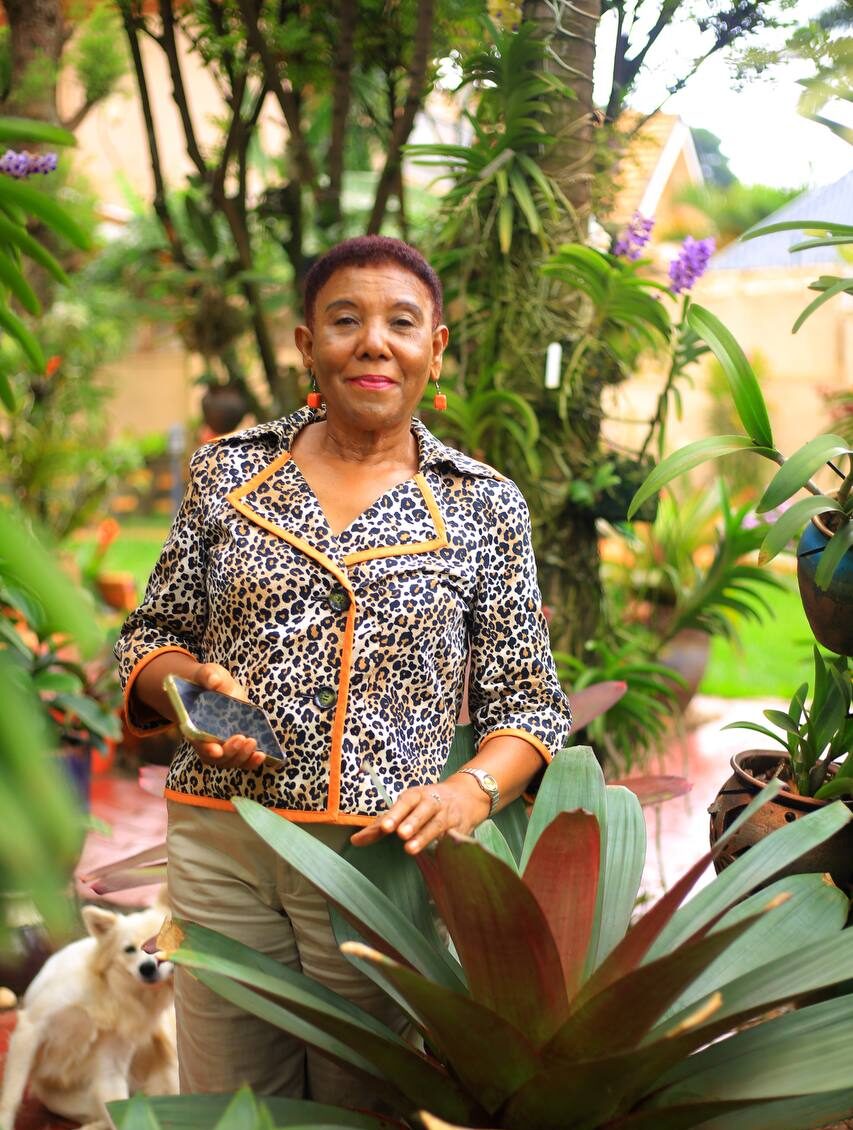
Q&A with Ameria Momo Masiko

Author, Mentor, and Nature lover.
Theme: Coping with Identity Crisis — Grow. Thrive. Heal: The Transformative Power of Nature.

Q1. You describe yourself as a person of multiple heritage — a Muchotala / coloured who chose to identify as a Mukiiga. How has this complex identity shaped your personal journey and the stories you tell as a writer?

Ans.
I am happy to share my story, what an intriguing question. My story is about the challenges of Growing up with multiple heritages that can be like navigating a lush garden with diverse, vibrant flora – it’s beautiful yet complex. Each flower represents a different part of my identity, and I’ve had to learn to appreciate the unique beauty of each one. As a Muchotala/coloured person who chose to identify as a Mukiiga, I’ve had to navigate the intricacies of belonging and self-discovery.

My life is like a Lotus flower, symbolizes my resilience in the face of adversity, blooming in the muddiest of waters yet remaining strong. Like the delicate petals of a Cherry Blossom, my identity has been shaped by the fragility and beauty of cultural heritage. The thorns of a Rose represent the challenges I’ve faced in a society bound by traditional expectations, particularly around gender roles.

Through the seasons of life, I’ve faced many challenges – struggles in school, job loss, marriage, and business struggles. But like the Sunflower’s ability to follow the sun, I’ve learned to focus on growth and find strength in adversity. My story is one of growth, thrive, and heal – and I believe that nature has been a constant source of inspiration and solace in my journey.

As I reflect on my experiences, I’m reminded that the complexity of my heritage is not a weakness, but a strength – a vibrant tapestry of experiences that make me who I am today. Through my writing, I hope to inspire others to find their own path, just as nature has inspired me While coping with the identity crisis, to grow, thrive, and heal.”

Q2. You spent your early career years in Nairobi in the 1980s, working with the external wing of the NRM/A. How did that period of exile influence your worldview, and do those experiences appear in your writing today?

Ans.
“My time in Nairobi in the 1980s, working with the external wing of the NRM/A, was a pivotal period in my life. As a young activist, I was driven by a desire to contribute to the empowerment and freedom of my people, particularly women. I recall the struggles and challenges we faced, but also the sense of purpose and camaraderie that came with working towards a common goal.

That experience not only shaped my worldview but also influenced my writing. I draw inspiration from the resilience and determination of the people I worked with, and the struggles we faced continue to inform my perspective on social justice and human rights. My experiences have taught me the importance of amplifying marginalized voices, particularly those of women and girls who were often overlooked or underrepresented.

In today’s world, I firmly believe that gender equality and empowerment are fundamental to creating a just and equitable society. An empowered woman can tackle big challenges, but when paired with a man who isn’t empowered or is bound by stereotypes and conservative ideologies, it can be even more daunting. That’s why it’s crucial to work on empowering both men and women, challenging patriarchal norms, and promoting a culture of mutual respect and understanding.

As a writer, I aim to contribute to this narrative, highlighting the strength and agency of men, boys, women and girls, and exploring the complexities of relationships and power dynamics. My experiences have shown me that when men and women are both empowered, communities thrive, and I believe that this message is more relevant now than ever. By working together to challenge stereotypes and promote gender equality, I believe we can create a more just and equitable world for all.”

Q3. Later, you worked in the President’s office, What lessons did you carry from that chapter of public service into your creative and mentoring life?

Ans.
“Working in the President’s office was a transformative experience that taught me valuable lessons about leadership, governance, and the human side of policy-making. One of the key takeaways was the importance of humility, understanding, and effective communication in building strong relationships and achieving personal growth. I learned that true leadership is not about titles or power, but about serving others and making a positive impact.

These lessons have stayed with me in my creative and mentoring work. I’ve come to realize that humility, empathy, and strong communication are essential in understanding people’s needs, building trust, and fostering meaningful connections. As a writer, I’ve learned to approach my characters and stories with a deeper understanding of the human condition, and to craft narratives that reflect the complexity and beauty of life.

But one of the most profound lessons I’ve learned is that you don’t need to be famous, hold a high-ranking office, have a string of degrees, or be wealthy to make a real impact on people’s lives. I’ve seen firsthand that ordinary people can do extraordinary things when they are passionate, dedicated, and committed to making a difference. This realization has humbled me and inspired me to focus on the work that truly matters – touching lives, telling stories that need to be told, and empowering others to find their path”

Q4. When you retired from office, you chose a completely different path — micro finance, mentoring and creating beautiful spaces, What drew you to these activities and how do you find healing or inspiration through nature?

Ans.

“After leaving office, I felt a void that couldn’t be filled by the trappings of power or prestige. I yearned for meaning and purpose that came from making a tangible difference in people’s lives. Microfinance, mentoring, and creating beautiful spaces allowed me to do just that.

I was drawn to microfinance because I believe in the power of economic empowerment, especially for women. Seeing individuals and communities thrive through small loans and support is incredibly fulfilling.

Mentoring has been a privilege, allowing me to pay it forward and guide others on their own paths. I find joy in watching people discover their strengths and passions.

Creating beautiful spaces is my way of connecting with nature and expressing creativity. Nature has been a source of healing and inspiration for me. Being in nature reminds me of the beauty and wonder of life, and it puts things into perspective. The rhythms of nature teach me about patience, resilience, and the importance of living in harmony with the world around us.

Through these activities, I’ve found a sense of purpose and fulfillment that I didn’t know was possible. They’ve taught me that true wealth isn’t measured by title or bank balance, but by the positive impact we have on others and the world around us.”

Q5. Your work, “Coping with Identity Crisis — Grow, Thrive, Heal”, explores transformation through nature. Could you tell us about the message at the heart of this project?

Ans

“My books, ‘Coping with Identity Crisis’ and ‘Grow, Thrive, Heal: The Transformative Power of Nature’, explore the human experience and the power of nature to heal and transform. In ‘Coping with Identity Crisis’, I delve into the universal struggle of finding oneself and navigating identity complexities.

In ‘Grow, Thrive, Heal’, I share practical insights on harnessing nature’s power, from creating vibrant spaces to finding peace in green areas like parks and forests. I draw inspiration from Blue Zones, where people live longer and healthier lives, emphasizing the importance of integrating nature, community, and well-being into daily life.

By embracing these principles, we can cultivate a deeper sense of purpose and fulfillment. Nature has the power to calm the mind, soothe the soul, and awaken a sense of belonging. Through these books, I aim to empower readers to live a purposeful life , find peace, connection, and transformation in the natural world.”

Q6. Many Ugandans today struggle with questions of belonging and self-definition. How do you think art — and nature — can help us navigate those inner conflicts?

Ans.

“Art and nature have a profound ability to help us navigate inner conflicts, especially when it comes to questions of belonging and self-definition. Art allows us to express emotions, thoughts, and experiences in a way that transcends words. Through creative expression, we can tap into our inner selves, process our struggles, and gain clarity on who we are and where we belong.

Moreover, when we share our stories and experiences through art, it helps us understand our pain and find meaning in it. By telling our stories, we can validate our emotions, find closure, and connect with others who may be going through similar struggles.

Nature, on the other hand, offers a sense of perspective and connection to something greater than ourselves. Being in nature can be calming, grounding, and meditative, allowing us to quiet our minds and tune into our hearts. By spending time in nature, we can tap into its wisdom, find solace in its rhythms, and discover a sense of belonging to the natural world.

In Uganda, where we have a rich cultural heritage and breathtaking natural beauty, I believe that art and nature can be powerful tools for self-discovery and healing. By embracing our creative expression, sharing our stories, and connecting with the natural world, we can navigate our inner conflicts, find our true selves, and cultivate a deeper sense of belonging and purpose.”

Q7. As a mentor, what advice do you give to young people, especially women, trying to reconcile multiple identities or reinvent themselves after major life transitions?

Ans.

“To young people, especially women, navigating multiple identities or reinventing themselves after major life transitions, I’d say this: embrace the complexity. Don’t feel pressured to fit into predefined boxes or conform to societal expectations. Their identities are multifaceted, and that’s what makes them unique.

To Take time to explore, reflect, and understand what truly resonates with them. Allow to evolve, make mistakes, and learn from them. Surround themselves with people who uplift and support them, and not to be afraid to seek guidance from mentors or role models who inspire them.

Remember, reinvention is not about erasing the past but about building upon it. Celebrate their strengths, acknowledge weaknesses, and be kind to themselves throughout the journey. Their worth and identity extend beyond any single role or label.

Lastly, not to underestimate the power of self-care and compassion. Take care of their physical, emotional, and mental well-being. They are worthy of love, respect, and happiness, not just for who they are, but for who they are becoming.”

Q8. Looking back, what moments or decisions most defined who Ameria Momo Masiko has become today?

Ans.

“Looking back, I’d say it’s been a combination of key moments and decisions that have shaped me into the person I am today. One pivotal decision was when I refused to accept an early marriage at the tender age of 15. Instead, I chose to prioritize my education and pursue my dreams.

I’m deeply grateful for the unwavering support of my family, particularly my parents , siblings and other members, who encouraged me to be all that I could be. Their love, guidance, and trust in me have been instrumental in helping me navigate life’s challenges.

I’ve also been blessed with true friends and partners who’ve stood by me through thick and thin. Their support, encouragement, and belief in me have meant the world.

Throughout my journey, I’ve been driven by a zeal for continuous learning, seeking growth and development through experiences and knowledge. These elements combined have shaped me into a strong, resilient, and confident individual. I’m grateful of the person I’ve become and look forward to continuing to learn, grow, and make a positive impact.”

Q9. What are you currently writing or working on, and how does it build on your personal philosophy of “Grow. Thrive.

Ans.

“I’m currently working on empowering and inspiring individuals, especially young people, to discover their purpose and live a balanced life. My focus is on creating vibrant and beautiful spaces that foster happiness and fulfillment. I’m passionate about promoting the Wheel of Life model, which emphasizes the importance of faith, family, finances, friends, and fitness in achieving overall well-being.

Through my work, I aim to inspire continuous learning, growth, and self-improvement. I believe that by thriving in these key areas, individuals can experience healing, peace, and a deeper sense of purpose. Additionally, I emphasize the importance of developing resilience and coping skills to navigate life’s challenges and adversity. I teach people how to accept mistakes, learn from them, and use them as opportunities for growth.

My goal is to help people live their best lives, surrounded by positivity, joy, and meaningful relationships. You can find my work in my books, including “Coping with Identity Crisis” and “Grow, Thrive, Heal: The Transformative Power of Nature.” I’m also active on various social media channels, including WhatsApp, LinkedIn, Instagram, and Facebook, where I engage in group discussions and one-on-one conversations, sharing insights and inspiration to support their journey towards growth and fulfillment.”

Q10. Finally, if you could summarize your life’s journey in one flower — which would it be, and why?

Ans.
That’s lovely!

If I had to summarize my life’s journey in one flower, I would choose the Orchid.

The Orchid represents elegance, resilience, and adaptability – qualities that have defined my journey. Just like the Orchid, I’ve learned to thrive in diverse environments and circumstances, and I’ve come to appreciate the beauty of uniqueness and individuality.

The Orchid’s delicate yet strong petals remind me of the importance of staying grounded and resilient in the face of challenges, while also embracing my own beauty and uniqueness. Its exotic and intricate beauty inspires me to help others discover their own unique strengths and talents, and to cultivate their own inner beauty.

Plus, Orchids are known for their ability to bloom in unexpected places, which resonates with my own journey of growth, transformation, and empowerment – proving that beauty and potential can emerge in unexpected ways.

~Senior Bata

NOTICE OF ANNUAL GENERAL MEETING